
Radio Online
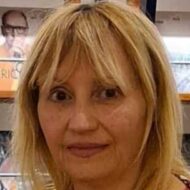
Intervista a Saeko: la cantante power metal ci parla del suo nuovo singolo, prossimo EP e dell’esperienza in Italia
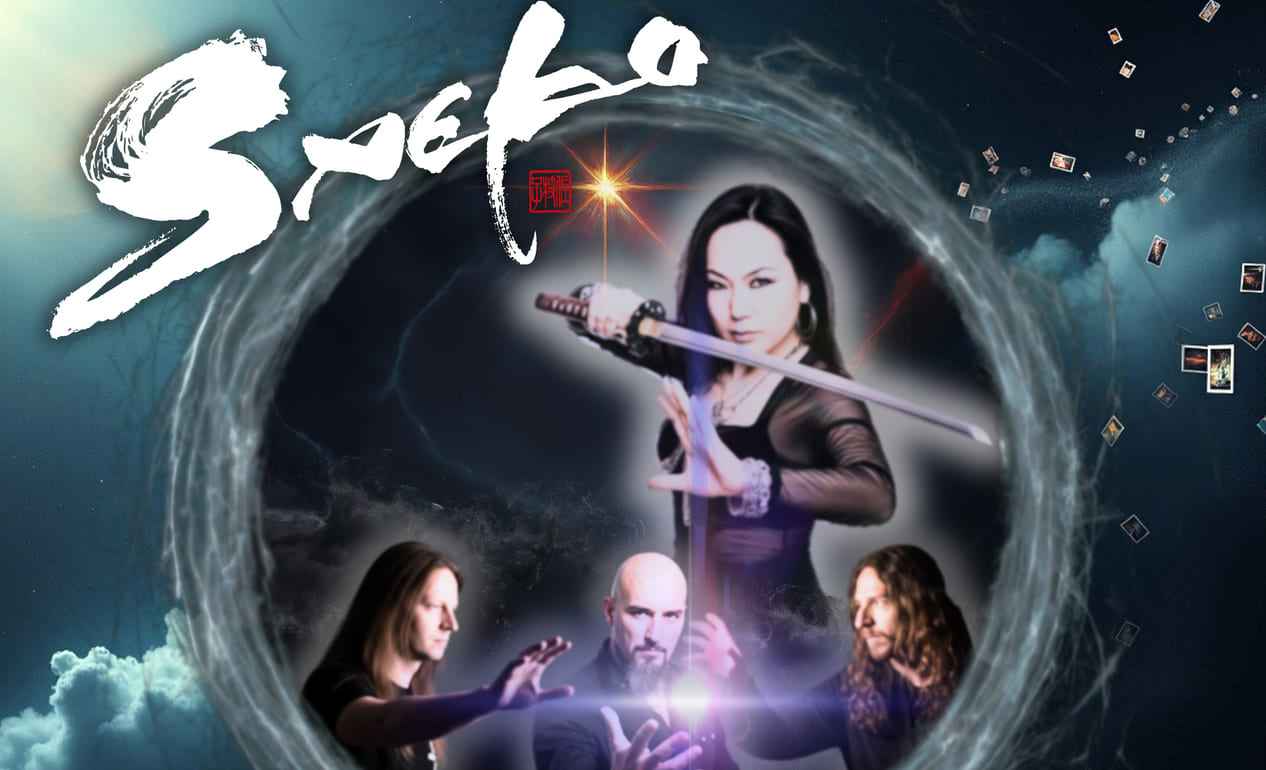
E’ un momento particolarmente impegnativo per Saeko, la regina del power metal giapponese. L’energica cantante, infatti, sta per pubblicare un nuovo singolo, Seek the Light (Reimagined), una versione nuova di un suo vecchio pezzo. Seek the Light (Reimagined) anticipa il prossimo EP di Saeko, Back to Life, che sarà disponibile dal prossimo 17 luglio. In questa interessante intervista con BACKdigit, la nota interprete ci parla del suo lavoro, dei suoi gusti in fatto di musica e della sua passione per l’Italia…
Intervista a Saeko
Stai per pubblicare il brano Seek the Light (Reimagined). Quali sono le principali differenze tra questa versione e quella originale?
Ovviamente i musicisti che suonano al mio nuovo cd questa volta sono diversi.
Fondamentalmente, le canzoni SAEKO iniziano con me che scrivo la musica e i testi utilizzando sintetizzatori MIDI e drum machine, e poi i membri della band arrangiano ulteriormente il materiale.
La versione originale di “Seek the Light”
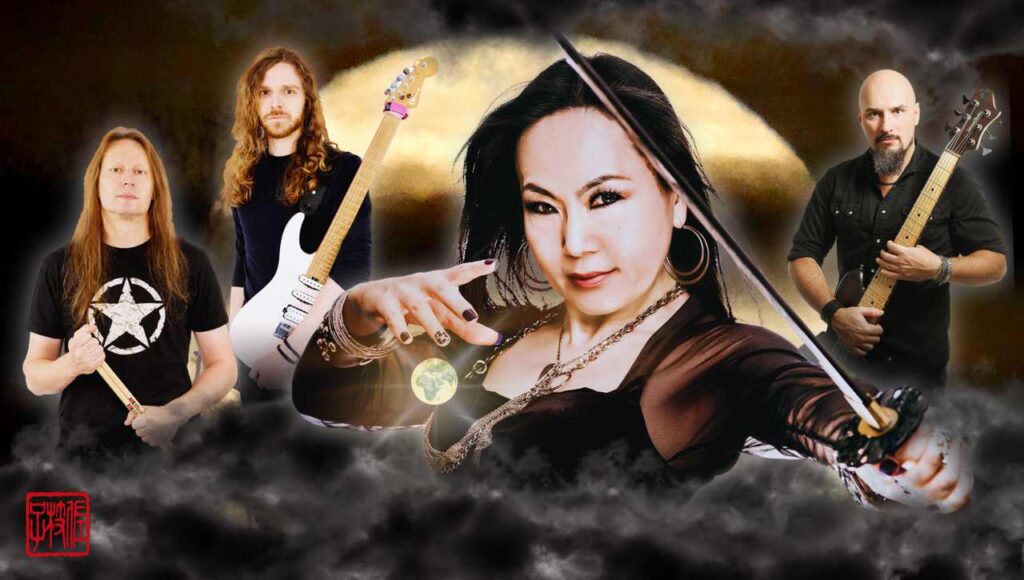
Nella versione originale, Michael Ehré non solo suonava la batteria ma si occupò anche di gran parte dell’arrangiamento generale e suonava anche le chitarre ritmiche. Per questa versione rivisitata, la formazione attuale – Guido Benedetti alla chitarra, Alessandro Sala al basso e Michael alla batteria – ha fatto anche di più. Penso che uno dei motivi per cui questa volta è andata meglio è che ogni parte è stata sviluppata dal musicista esperto di quel determinato strumento, permettendo così a ogni strumento di brillare a modo suo.
Il grande lavoro fatto dalla band
Naturalmente tutti hanno fatto un lavoro fantastico, ma Guido è stato assolutamente eccezionale in questa canzone in particolare. Ha aggiunto ulteriori strati di accordi durante le sezioni del ritornello, conferendo alla canzone un’atmosfera molto più luminosa e piena di speranza rispetto a prima. E soprattutto, il suo assolo di chitarra è incredibile.
Onestamente, se confronti la versione originale a quella di adesso e le metti fianco a fianco, ti accorgi immediatamente della differenza.
Per me, questa versione suona molte volte più forte dell’originale.
Adoro anche la sezione di batteria arricchita dall’assolo. Ovviamente la performance di Michael è fantastica, ma insieme al nostro tecnico V. Santura, abbiamo anche sperimentato un po’ con il suono della batteria stessa, rendendo la parte ancora più interessante e potente.
Il tuo nuovo EP, Back to Life uscirà molto presto. Vuoi anticiparcene i contenuti?
L’EP include versioni rivisitate di tre brani del mio primo album, Above Heaven Below Heaven “Seek the Light”, “Sins for the Gods” e “Sinners for False Lights”.
Inoltre, abbiamo incluso anche una versione rimasterizzata di una bonus track dall’edizione giapponese del mio precedente album Holy Are We Alone. Al di fuori del Giappone, era praticamente inedita così ho sempre pensato che fosse troppo bella per rimanere solo una bonus track giapponese.
Saeko: un pezzo speciale per il nuovo EP
E c’è anche un’altra canzone molto speciale. Negli anni ’90, prima dei SAEKO, ero in una band giapponese chiamata Fairy Mirror, e chiudevamo i nostri spettacoli dal vivo con un pezzo intitolato “Glorious Day”. Questa volta ho registrato nuovamente la canzone con l’attuale formazione dei SAEKO.
In molti modi, questo EP è un ritorno alle mie radici, perché tutte queste canzoni sono state scritte originariamente più di 20 anni fa.
Allo stesso tempo, penso che anche il suono sia leggermente diverso dagli altri album. Questa volta non abbiamo usato molte tastiere, e in questo senso l’EP sembra più orientato al rock o forse più alla chitarra rispettp a qualsiasi cosa io abbia mai fatto prima.
Parlando delle tue performance live, ti avvali di una band di prima classe, con membri del calibro di Alessandro Sala e Michael Ehré. Come li hai coinvolti nel tuo lavoro?
In realtà, per gli spettacoli dal vivo di questo mese, a parte Guido Benedetti, mi sono esibito con musicisti giapponesi quindi immagino che questa domanda riguardi più le registrazioni che la band dal vivo, giusto? (ride)
Michael Ehré ha lavorato con me sin dal mio primo album nel 2004, quindi la risposta alla domanda “come lo hai coinvolto?” In realtà è molto semplice: il mio manager all’epoca era Lars Ratz. A quei tempi Michael era il batterista dei Metalium. Io tra l’altro grazie a questo contatto presi anche lezioni di formazione vocale con Henning Basse per circa quattro anni.
La storia di Guido è una curiosa coincidenza. Penso che fosse febbraio 2019 i Trick or Treat vennero in Giappone in tour. Io in quel periodo lavoravo come giornalista per una rivista web di musica. Intervistai la band e durante la nostra conversazione scoprimmo che Guido era effettivamente tra il pubblico alla mia esibizione al Wacken Open Air nel 2005. Entrambi siamo rimasti davvero entusiasti di quella coincidenza.
Dopo l’intervista siamo rimasti in contatto per scambiarci foto e video e ad un certo punto Guido mi ha chiesto: “Hai fatto uno spettacolo così straordinario al Wacken… quindi perché non fai musica adesso?”
Saeko: alla ricerca di un chitarrista per la sua band
La verità è che avevo già pensato seriamente di rimettere in piedi una band, ma ero alla disperata ricerca di un chitarrista. Come ho detto prima, le canzoni SAEKO iniziano con me che scrivo la musica utilizzando sintetizzatori MIDI e drum machine, ma per fare il passo successivo ho davvero bisogno di un chitarrista che mi aiuti ad arrangiare e sviluppare adeguatamente le canzoni.
Quindi gli ho detto: “Voglio fare di nuovo musica, ma non posso perché non ho un chitarrista”.
E Guido mi ha risposto: “Un chitarrista? Beh… io sono un chitarrista. Vogliamo farlo insieme?”
E io ho pensato: “Aspetta… sul serio?” (ride)
Alessandro Sala: la persona giusta
Per quanto riguarda Alessandro Sala, qualche mese prima avevo lavorato come tour manager dei Rhapsody of Fire durante il loro tour in Giappone, quindi ero già molto legata alla band. Mi sono reso conto che Alessandro non era solo un ottimo bassista, ma anche una persona con cui mi sentivo in sintonia in modo molto naturale a livello personale.
Leggi anche: Saeko: la cantante power metal giapponese torna con il singolo Seek the Light (Reimagined)
Quindi quando ho iniziato a pensare: “Okay, ora ho bisogno di un bassista”, mi è venuto subito in mente lui. Ho contattato sia lui che i membri della band, incluso Alex Staropoli, e per fortuna mi hanno tutti supportato molto. È così che Alessandro ha cominciato a lavorare con me.
Di recente ti sei esibita a Osaka e a Tokyo. Come sono stati questi concerti e pensi di tornare presto on stage?
Penso che gli spettacoli siano stati davvero fantastici. Questa volta, i or Treat avevano già in programma un tour in Giappone, quindi abbiamo deciso di prolungare la permanenza di Guido Benedetti in Giappone e organizzare gli show SAEKO a ridosso di questa opportunità.
I concerti dei Trick Or Treat si tenevano venerdì, sabato e domenica. Noi facemmo la nostra prima prova lunedì, seguita dagli spettacoli dal vivo martedì e giovedì. Dato che erano concerti nei giorni feriali, il numero del pubblico era inferiore a quello che speravamo, ma onestamente, penso che le esibizioni siano state comunque eccellenti, soprattutto considerando che abbiamo fatto solo una prova.
I concerti con i Trick Or Treat
Molti che hanno assistito agli spettacoli, compresi i proprietari dei locali, mi hanno già detto che vorrebbero che lo facessimo di nuovo.
Ma ad essere onesti, il problema più grande è sempre il costo. Spostare gente dall’Europa al Giappone e gestire le loro richieste di visto è estremamente costoso, e questo è sempre stato l’ostacolo principale.
Portare regolarmente tutti e tre – Guido Benedetti, Alessandro Sala e Michael Ehré in Giappone è sfortunatamente al di là ciò che posso permettermi. Ma forse in futuro potrebbe essere possibile una formazione con il solo Guido che viene dall’Europa e il resto con membri giapponesi.
Tuttavia, in realtà, dal punto di vista finanziario, sarebbe molto più economico per me volare in Europa da sola e esibirmi lì. Quindi, onestamente, è qualcosa che spero davvero di poter fare un giorno.
Cosa ne pensi della robusta scena rock metal giapponese e quali sono gli artisti che ti piacciono di più?
Penso che le cose siano diventate molto più facili rispetto al passato. Quando mi sono trasferito per la prima volta in Germania da sola, non c’erano smartphone, né Wi-Fi e nemmeno tecnologie avanzate come Google Translate che all’epoca funzionava male ed era praticamente inutili. Di conseguenza la scena giapponese era molto autonoma e non c’era quasi nessuna reale connessione internazionale.
Ma recentemente, ho la sensazione che sempre più band giapponesi stiano condividendo festival ed eventi con artisti di altri paesi, e la distanza tra la scena nazionale e quella internazionale si è ridotta molto. In molti modi, anche i nostri recenti spettacoli dal vivo facevano parte di questo stesso movimento.
Onestamente, non credo che avrei potuto fare questi concerti interamente da sola. Penso che il fatto che siano diventati una realtà rifletta quanto le barriere tra le band metal giapponesi e quelle straniere si siano abbassate all’interno della scena nel suo insieme.
Saeko e la frenetica attività live degli anni ’90
Per quanto riguarda i miei musicisti giapponesi preferiti… a dire il vero, negli anni ’90 suonavo costantemente dal vivo. Mi esibivo quasi ogni mese e probabilmente trascorrevo più tempo nei locali a cantare dal vivo che a casa. A quel tempo conoscevo quasi tutte le band della scena.
Ma oggi come oggi non vado più nei locali così spesso. In parte perché ogni volta che vado da qualche parte, la gente mi nota immediatamente e dice: “Oh, Saeko è qui!” E poi a volte iniziano a circolare voci strane, come “Saeko è andato al concerto di quella band, ma non al nostro”, e cose del genere. Quindi in un certo senso è diventato più difficile per me assistere senza essere notata agli spettacoli. Per questo motivo, onestamente, non credo di essere tanto informata sull’attuale scena giapponese per parlare come da esperta dei musicisti di oggi.
Hai mai pensato di collaborare con qualche act noto giapponese tipo HYDE, Yoshiki, i Luna Sea?
No, non proprio. Artisti come HYDE, Yoshiki o LUNA SEA provengono maggiormente dalla scena visual kei, quindi in un certo senso io e loro facciamo parte di un mondo musicale diverso
Non è che non mi piacciano affatto. È semplicemente che le nostre sfere e i nostri background musicali differiscono leggermente.
A dire il vero, potrei immaginare molto più naturalmente di collaborare con gruppi progressive metal o thrash metal giapponesi, poiché sono più vicini alla scena musicale di cui ho sempre fatto parte.
L’esperienza live in Italia
Tu sei già stata ad esibirti in Italia. Cosa ne pensi di questo paese e ti piacerebbe tornare per un intero tour?
Certamente, sono stato in Italia diverse volte. Ho partecipato al Frontiers Rock Festival più di una volta e ho anche visitato frequentemente l’Italia mentre registravo il mio scorso album. Sono stata nel vostro paese anche da semplice turista. Pensa che una volta sono stata perfino invitata a tenere una conferenza presso una università di Roma.
Mi piace davvero l’Italia. Il cibo è fantastico e le città hanno un forte senso della storia e della cultura. L’unica difficoltà che ho incontrato è stata di tipo linguistico. Forse adesso è diverso, ma quando ci sono stato in passato, anche l’inglese basico spesso non funzionava bene nei bar e nei piccoli locali, quindi c’erano momenti in cui dovevo comunicare quasi esclusivamente a gesti. (ride) Ma a parte questo, non ho avuto nessun problema.
Il progetto di tornare a suonare nel nostro paese
E si’, certo che mi piacerebbe fare un tour in Italia. Molto tempo fa sono stato in tournée insieme a Doro Pesch e, se ricordo bene, il piano originale includeva Germania, Svizzera e Italia. Ma penso che le date italiane alla fine siano state cancellate, quindi non ho mai avuto la possibilità di esibirmi lì. Quindi nei miei progetti futuri c’è di sicuro quello di suonare nel vostro paese.
E per concludere grazie per esserti interessata alla mia musica e alla mia storia.
Saeko Interview
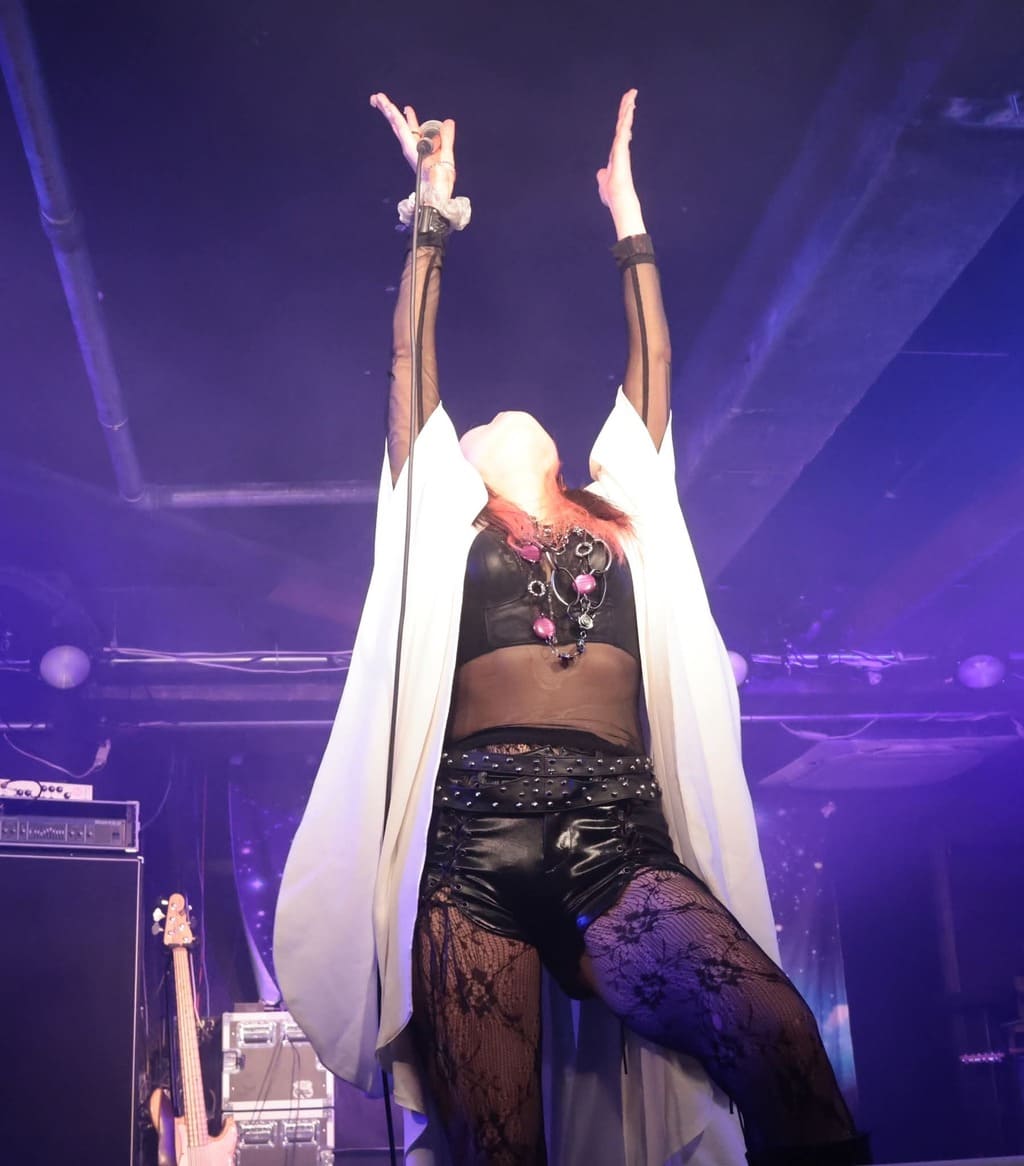
You are about to release the song Seek the Light (Reimagined). What are the main differences between this version and the original one?
Leggi anche: SAEKO ANNUNCIA “SAEKO LIVE IN JAPAN 2026” ED IL NUOVO EP “BACK TO LIFE”
Of course, the members are different this time.
Basically, SAEKO songs start with me writing the music and lyrics using MIDI synths and drum machines, and then the band members arrange the material further.
On the original version, Michael Ehré not only played drums but also handled much of the overall arrangement and even played the rhythm guitars. For this reimagined version, the current lineup — Guido Benedetti on guitar, Alessandro Sala on bass, and Michael on drums — took every part even further. I think one of the reasons it turned out better this time is that each part was developed by the musician who actually specializes in that instrument, allowing every instrument to shine in its own way.
Of course, everyone did an amazing job, but Guido was especially outstanding on this particular song. He added extra chord layers during the chorus sections, giving the song a much brighter and more hopeful atmosphere than before. And above all, his guitar solo is incredible.
Honestly, if you compare the original and the new version side by side, I think the difference is obvious.
To me, this version sounds many times stronger than the original.
I also really love the drum section after the solo. Of course Michael’s performance is fantastic, but together with our engineer V. Santura, we also experimented a little with the drum sound itself, making the part even cooler and more powerful.
Your new EP Back To Life will be out soon. Can you anticipate a little about the songs included in the tracklist?
The EP includes reimagined versions of three songs from my first album, Above Heaven Below Heaven — “Seek the Light,” “Sins for the Gods,” and “Sinners for False Lights.”
In addition, we also included a remastered version of a bonus track from the Japanese edition of my previous album Holy Are We Alone. Outside Japan, it was basically unheard of, and I always felt it was far too good to remain just a Japanese bonus track.
And there’s another very special song Back in the 1990s, before SAEKO, I was in a Japanese band called Fairy Mirror, and we used to close our live shows with a song called “Glorious Day.” This time, I re-recorded the song with the current SAEKO lineup.
In many ways, this EP feels like a return to my roots, because all of these songs were originally written more than 20 years ago.
At the same time, I think the sound is also slightly different from other albums. This time we didn’t use many keyboards, and in that sense the EP feels more rock-oriented—or perhaps more guitar-oriented—than anything I’ve done before.
Talking about your live performances, you are playing with a fist class band, including Alessandro Sala and Michael Ehré. How did you involve them in your work?
Actually, for the live shows this month, apart from Guido Benedetti, I performed with Japanese musicians — so I guess this question is more about the recordings than the live band, right? (laughs)
Michael Ehré has been working with me since my first album back in 2004, so the answer to “how did you involve him?” is actually very simple: my manager at the time was Lars Ratz. Back then Michael was the drummer of Metalium. Through the same connection, I also took vocal training lessons with Henning Basse for about four years.
Guido’s story is a funny coincidence. I think it was February 2019 when Trick or Treat came to Japan for a tour, and at that time I was working as an interviewer for a music web magazine. I interviewed the band, and during our conversation we discovered that Guido had actually been in the audience for my Wacken Open Air performance back in 2005. We both got really excited about that coincidence.
After the interview, we stayed in contact to exchange photos and videos from the coverage, and at one point Guido asked me, “You played such an amazing show at Wacken… so why aren’t you doing music now?”
Saeko: desperately seeking for a guitarist
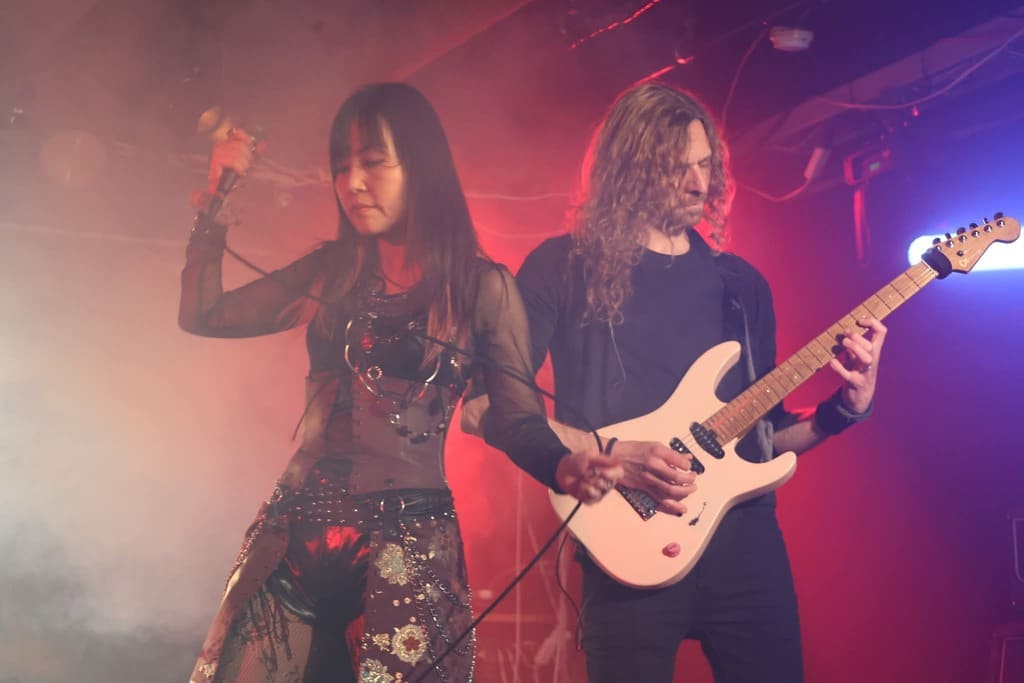
The truth was that I had already been thinking seriously about restarting a band, but I was desperately searching for a guitarist. As I mentioned earlier, SAEKO songs begin with me writing the music using MIDI synths and drum machines, but I really need a guitarist to properly arrange and develop the songs after that.
So I told him, “I want to do music again, but I can’t because I don’t have a guitarist.”
And Guido replied, “A guitarist? Well… I’m a guitarist. Want to do it together?”
And I was like, “Wait… seriously?” (laughs)
As for Alessandro Sala, a few months earlier I had worked as tour manager for Rhapsody of Fire during their Japan tour, so I had already become very close with the band. I realized that Alessandro was not only an excellent bass player, but also someone I connected with very naturally on a personal level.
So when I started thinking, “Okay, now I need a bassist,” he immediately came to mind. I contacted both him and the band members, including Alex Staropoli, and thankfully they were all very supportive. That’s how Alessandro joined the work.
Recently you have been playing in Osaka and Tokyo. What were the reactions of the audience and when will you be back to touring?
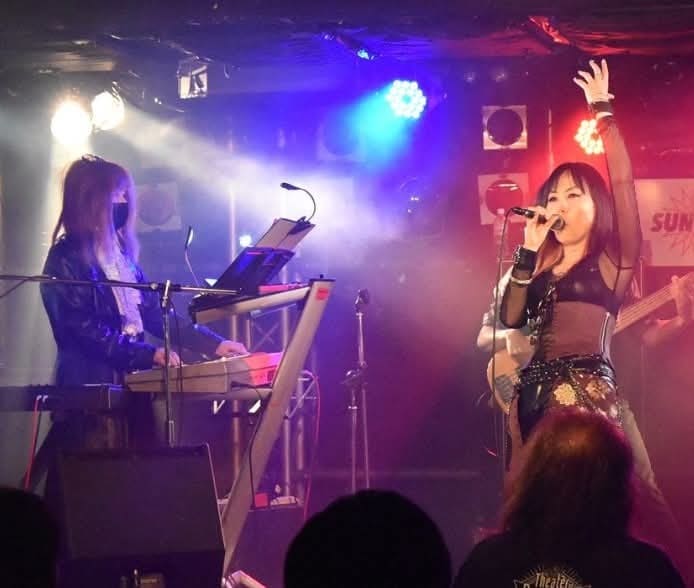
I think the shows were really great. This time, Trick or Treat already had a Japan tour scheduled, so we decided to extend Guido Benedetti’s stay in Japan and organize the SAEKO shows around that opportunity.
The Trick Or Treat concerts were on Friday, Saturday, and Sunday. Then we had our first rehearsal on Monday, followed by the live shows on Tuesday and Thursday. Since they were weekday concerts, audience numbers were smaller than we had hoped, but honestly, I think the performances themselves were excellent—especially considering we only had one rehearsal.
The shows with Trick Or Treat
Many people who attended the shows, including venue owners, have already told me they want us to do it again.
But to be honest, the biggest problem is always the cost. Bringing members from Europe to Japan and handling their visa applications is extremely expensive, and this has always been the main obstacle.
Unfortunately, bringing all three — Guido, Alessandro Sala, and Michael Ehré — to Japan regularly is probably beyond what I can afford. But perhaps a setup with only Guido coming from Europe and the rest being Japanese members could be possible in the future.
However, actually, from a financial standpoint, it would be much cheaper for me to fly to Europe alone and perform there instead. So honestly, that’s something I really hope to make happen someday.
What do you think about the powerful rock scene in Japan? What are your favourite Japanese musicians?
I think things have become much easier compared to the past. When I first moved to Germany alone, there were no smartphones, no Wi-Fi, and even tools like Google Translate were basically useless. So, back then, the Japanese scene was very self-contained, and there was almost no real international connection.
But recently, I feel that more and more Japanese bands are sharing festivals and events with overseas artists, and the distance between the domestic and international scenes has become much smaller. In many ways, our recent live shows were also part of that same movement.
Honestly, I don’t think I could have made these concerts happen entirely by myself. I think the fact that they became reality reflects how much the barriers between Japanese and overseas metal bands have lowered within the scene as a whole.
The frenetic live activity in the Nineties
As for my favorite Japanese musicians… to be honest, back in the 1990s I was playing live constantly. I was performing almost every month and probably spent more time in live venues than at home. At that time, I knew almost every band in the scene.
But these days, I don’t go to venues nearly as often. Partly because whenever I go somewhere, people immediately notice me and say, “Oh, Saeko is here!” And then sometimes strange rumors start — like “Saeko went to that band’s show, but not ours,” and things like that. So in a way it has become harder for me to casually attend shows. Because of that, I honestly don’t feel knowledgeable enough about the current Japanese scene to speak like an expert about today’s musicians.
Have you ever thought about collaborating with someone like HYDE, Yoshiki, Luna Sea…?
No, not really. Artists like HYDE, Yoshiki, or LUNA SEA come more from the visual kei scene, so in a way we exist in different parts of the rock and metal world.
It’s not that I dislike them at all. It’s simply that our musical spheres and backgrounds differ slightly.
To be honest, I could much more naturally imagine collaborating with Japanese progressive metal bands or thrash metal bands, as they are closer to the musical scene I’ve always been part of.
The live experience in Italy
You ever been performing in Italy. What do you think about this country and would you like to come touring here?
Of course—I’ve been to Italy several times. I’ve attended the Frontiers Rock Festival more than once, and I also visited Italy several times while recording my previous album. I’ve even been there as a tourist. Actually, I was once invited to give a guest lecture at a university in Rome.
I really like Italy. The food is amazing, and the cities have such a strong sense of history and culture. The only difficulty I encountered was the language barrier. Maybe it’s different now, but when I visited in the past, even simple English often didn’t work well in cafés and small places, so there were times when I had to communicate almost entirely with gestures. (laughs) But apart from that, I had no problems at all.
The plan of playing live again in Italy
And yes, of course I would love to tour in Italy. A long time ago, I toured together with Doro Pesch, and if I remember correctly, the original plan included Germany, Switzerland, and Italy. But I think the Italian dates were eventually cancelled, so I never actually got the chance to perform there. So playing in Italy is definitely something I still want to do someday.
And finally, thank you for taking an interest in my music and story.
I truly hope this new EP, Back to Life, reaches many more people than before.
Altro per te
 Japanese Rock
SAEKO: la band power metal lancia una campagna di crowdfunding per il nuovo album
La band power metal SAEKO torna sulla scena musicale con un nuovo entusiasmante capitolo. Dopo il successo del suo ultimo lavoro, la talentuosa cantante…
 David McDaniel firma con Elevate Records e lancia Starbearer: il power metal incontra il fantasy
 ASSIGNMENT – With The End Comes Silence: il progressive power metal che guarda oltre il caos
 FROZEN LAND: “Icemelter” In Uscita Il 21 Novembre 2025 – Potenza, Oscurità e Melodia Nel Nuovo Album Della Band Power Metal Finlandese
 Stranger Vision: il nuovo album ‘Faust’ tra power metal, prog e metalcore per un’indagine sonora sulla natura umana
 Perseus: il 19 aprile esce “Into the Silence”, il nuovo album dell’apprezzata power metal band
 Temperance – Arcani: il potere dei Tarocchi incontra il symphonic power metal
 Masterplan – “Metalmorphosis”: il ritorno di del power metal tedesco
Su eBay: Saeko




Link affiliati: se acquisti, BACKdigit riceve una piccola commissione senza costi per te.