
Revolver dei Beatles: la creazione di un capolavoro che ha influenzato il mondo del rock
Pubblicato nell’agosto del 1966, l’album dei Beatles Revolver è ampiamente considerato un punto di svolta cruciale, che segnò il passaggio dei Beatles da fenomeni pop globali a pionieri della sperimentazione in studio. Dopo la decisione di ritirarsi dalle esibizioni dal vivo, i Beatles trascorsero oltre 220 ore in studio, quasi il triplo del tempo impiegato per il loro precedente album Rubber Soul. Creando un paesaggio sonoro che all’epoca non poteva essere replicato sul palco.
Le nuove tecniche usate per le registrazioni di Revolver

Nell’album furono utilizzate diverse nuove tecniche: come l’Automatic Double Tracking, inventato agli Abbey Road Studios da Ken Townsend per soddisfare l’avversione di John Lennon
per il double tracking manuale delle voci. La tecnica creava una copia ritardata di un segnale audio per addensare il suono. Anche la “Tape Manipulation”, utilizzata durante la registrazione di “Revolver”, e l’ampio uso di loop di nastro e registrazioni al contrario da parte dei Beatles.
L’assolo di chitarra di I’m Only Sleeping
Ad esempio, nel brano “I’m Only Sleeping”, George Harrison trascorse ore a perfezionare un assolo di chitarra, suonato e registrato appositamente per suonare correttamente quando il nastro veniva invertito. Inoltre, l’uso di un Leslie Speaker fu utilizzato per soddisfare la richiesta di John Lennon di suonare come “il Dalai Lama che canta dalla cima di una montagna” nel brano “Tomorrow Never Knows”, dove la voce di John fu trasmessa attraverso un cabinet Leslie rotante normalmente utilizzato per gli organi. Infransero anche gli standard di registrazione tradizionali. Posizionarono i microfoni estremamente vicini agli strumenti, ad esempio spostandoli a pochi centimetri dalla grancassa di Ringo e riempiendola di vestiti per produrre un suono martellante, così come con gli strumenti a corda in “Eleanore Rigby” e gli ottoni in “Got To Get You Into My Life”.
L’influenza musicale di George Harrison
Un aspetto che va menzionato è l’emergere di George Harrison come fattore influente nei progetti musicali in corso dei Beatles. La voce creativa di George maturò significativamente in “Revolver”. Contribuì a “Revolver” con tre brani. “Tax Man”, un tagliente commento sociale, “I Want To Tell You”, una canzone sulla difficoltà di esprimere i pensieri, e “Love You Too”. Questo fu il pezzo che introdusse la musica classica indostana al pubblico pop occidentale attraverso il sitar e le tabla.
Tomorrow Never Knows: l’innovativo brano conclusivo di Revolver
Tomorrow Never Knows è l’innovativo brano conclusivo di Revolver e ha segnato un passaggio radicale alla sperimentazione psichedelica e d’avanguardia in studio. Scritta da John Lennon, la canzone è un’esplorazione sonora della spiritualità orientale indotta dall’LSD, ampiamente ispirata a “The Psychedelic Experience” di Timothy Leary.

Il brano è famoso per la sua struttura ipnotica a un solo accordo, i loop di nastro, che includevano risate accelerate e chitarre invertite. In più un pesante pattern di batteria.
L’eredità di Revolver dei Beatles

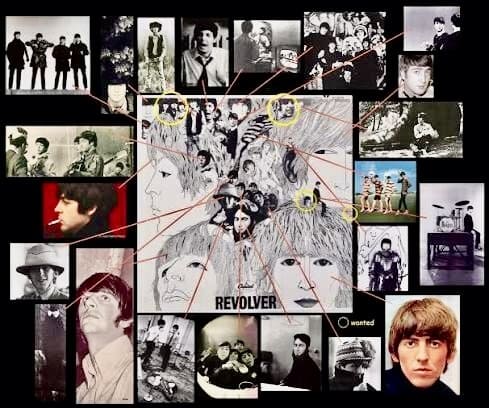
L’eredità e la reputazione critica iniziano con la copertina dell’album “Revolver”. Un collage in bianco e nero disegnato dall’amico dei Beatles Klaus Voormann, che ha vinto un “Grammy per la migliore copertina di un album”.

Negli ultimi decenni, i critici e non solo considerano “Revolver” il miglior album dei Beatles. Spesso piazzandolo al di sopra di “Sargent Pepper’s Lonely Hearts Club Band” per il suo perfetto equilibrio tra accessibilità pop e sperimentazione audace. A Revolver viene attribuito il merito di aver diviso a metà il decennio musicale, spingendo la musica pop verso l’arte più alta. L’album è citato come un’opera fondamentale per il rock psichedelico, l’elettronica e il rock progressivo, e ha anche aperto la strada all’alternative rock, con brani come “Tomorrow Never Knows” che hanno fatto da modello per l’artistica musica per chitarra di band come The Smiths, R.E.M. e Radiohead.
Impatto Britpop: Gruppi successivi, in particolare The Jam (che usarono il basso “Taxman” per la loro canzone “Start”) e gli Oasis campionarono ampiamente e imitarono le aggressive texture sonore di Revolver. I suoi moderni standard di produzione rimangono ancora oggi prassi standard nelle registrazioni moderne.
La musica indiana nel sound dei Beatles

L’immersione di George Harrison nella musica indiana trasformò il sound dei Beatles, spostando la traiettoria creativa della band dal pop rock occidentale verso strutture musicali introspettive e non standard. Mentre la scrittura di George introdusse concetti come l’autorealizzazione, l’illusione di un mondo materiale e l’amore universale nei testi mainstream, catalizzando diversi cambiamenti nell’industria musicale, tra cui la nascita del raga rock, favorita dal successo dei brani di George intrisi di influssi indiani, ispirò altri musicisti contemporanei come i Rolling Stones nella loro canzone “Paint It Black”, e anche se i Byrds non utilizzavano effettivamente strumenti tradizionali indiani.
Furono fortemente influenzati da Ravi Shanker, che ispirò Roger McGuinn a emulare il suono del sitar usando la sua Rickenbacker a 12 corde in combinazione con un’accordatura modificata per creare un effetto drone orientale nei brani più psichedelici dei Byrds. Ma non furono i soli: gli strumenti orientali alimentarono molte band rock psichedeliche groovy della metà degli anni ’60.
Revolver: un punto di riferimento per la musica creativa

Revolver rappresenta il ponte definitivo tra l’era pop “Mop Top” e l’avvento del rock come forma d’arte elevata. Abbandonando il palco per lo studio di registrazione, i Beatles dimostrarono che la musica poteva essere un’esperienza sofisticata e puramente sonora, piuttosto che una semplice performance dal vivo. Inventando di fatto la moderna filosofia dello “studio come strumento”. Il suo impatto sull’industria musicale fu sconvolgente. Legittimò la psichedelia, aprì la strada alle tecniche elettroniche e globalizzò la filosofia orientale, espandendo per sempre il vocabolario lirico della musica popolare oltre il semplice romanticismo. Per gli ascoltatori, l’album offrì un nuovo tipo di intimità e profondità intellettuale,
incoraggiando una generazione a considerare la musica come uno strumento di autoesplorazione e di critica sociale. L’eredità di Revolver persiste in ogni genere musicale, dall’indie all’EDM. Revolver rimane
il punto di riferimento per l’assunzione di rischi musicali creativi che hanno rimodellato il panorama culturale del XX secolo.
REVOLVER BY THE BEATLES: THE MAKING OF A MASTERPIECE AND ITS INFLUENCIAL REVERBERATION ON ROCK

Released in August of 1966, the Beatles album Revolver is widely considered a pivotal turning point where the Beatles transitioned from global pop sensations into experimental studio pioneers. Following their decision to retire from live performances, the Beatles spent over 220 hours in the studio,nearly triple the time used for their previous album Rubber Soul. Crafting a soundscape that at that time couldn’t be replicated on stage.
The new techniques used on Revolver

There were a number of new techniques used on the album: Such as, Automatic Double Tracking, invented at Abbey Road Studios by Ken Townsend to satisfy John Lennon’s dislike of manual double tracking vocals. The technique created a delayed copy of an audio signal to thicken the sound. While “Tape Manipulation”, used during recording “Revolver”, and the Beatle’s extensive use of tape loops and backward (reversed) recordings.
The solo guitar on I’m Only Sleeping
For instance, on the song “I’m Only Sleeping”, where George Harrison spent hours perfecting a guitar solo that was played and recorded specifically to sound correct when the tape was reversed. In addition, the use of a Leslie Speaker was used to achieve John Lennon’s request to sound like “the Dalai Lama singing from a mountaintop” on the song “Tomorrow Never Knows”, when John’s vocals were fed through a rotating Leslie speaker cabinet normally used for organs. They also broke traditional recording standards by placing microphones extremely close to instruments, such as moving microphones
just inches from Ringo’s bass drum and stuffing it with clothing to make a thumping sound, as well as with the string instruments on “Eleanore Rigby” and the brass on “Got To Get You Into My Life”.
George Harrison musical influence

One thing that must be mentioned was George Harrison emergence as an influential factor in
ongoing Beatles musical projects. George’s creative voice matured significantly on “Revolver”. He contributed three tracks to “Revolver”, “Tax Man”, a biting social commentary. “I Want To Tell You”, a song about the difficulties of expressing thoughts,
and “Love You Too” which introduced Hindustani classical music to the western pop audience via the sitar and tabla.
Revolver Beatles
Tomorrow Never Knows: a groundbreaking track
Tomorrow Never Knows is the groundbreaking closing track on Revolver, and it marked a radical shift into psychedelic, avant garde studio experimentation. Written by John Lennon the song is a sonic exploration of LSD-induced, Eastern spirituality, largely inspired by Timothy Leary’s. “ The
Psychedelic Experience”. The track is famous for its hypnotic, one chord structure, tape loops, that included sped up laughter and reversed guitars, and a heavy drum pattern.
The legacy of Revolver

Legacy and critical standing starts with “Revolvers” album cover, a black and white collage designed by the Beatles friend Klaus Voormann, who won a “Grammy For Best Album Cover”.
In recent decades, critics and more then a few others consider “Revolver” as the Beatles best album, often placing it above “Sargent Pepper’s Lonely Hearts Club Band” due to its perfect balance of pop accessibility and fearless experimentation. Revolver is credited with splitting the musical decade in half, moving pop music towards high art.The album is cited as a foundational work for, Psychedelic Rock,Electronica and Progressive Rock, and it also paved the way
for Alternative Rock, with tracks like”Tomorrow Never Knows” serving as a blueprint for the artful guitar music of bands like The Smiths, R.E.M., and Radiohead. Britpop Impact: Later groups, specifically The Jam,(who used the “Taxman” bass for their song, ”Start”) and Oasis heavily sampled and mimicked the aggressive sonic textures of Revolver.
Its modern production standards still remain standard practices in modern recording.
The indian music and The Beatles sound

George Harrison’s immersion in Indian music transformed the Beatles sound, shifting the band’s creative trajectory. from Western Pop Rock towards introspective, non- standard musical structures. While George’s songwriting, introduced concepts such as self-realization, the illusion of a material world and universal love into mainstream lyrics, catalyzing several musical industry shifts, including the birth of raga rock, which was brought on by the success of George’s Indian infused tracks, inspired other musical contemporaries like The Rolling Stones on their song “Paint It Black”, and also although the Byrds, did not actually use traditional Indian instruments.
They were heavily influenced by Ravi Shanker. Inspiring Roger McGuinn to emulate the sound of the sitar using his 12 string Rickenbacker in combination with altered tuning to create an Eastern drone effect on the Byrds more psychedelicized tracts. But they were not alone, Eastern instruments fueled many a groovy mid-1960’s psychedelic rock bands.
Revolver: the industry gold standard for creative music

Revolver stands as the definitive bridge between the “Mop Top” era of pop music and the arrival of rock as a high art form. By abandoning the stage for the studio, the Beatles proved that music could be a sophisticated, purely sonic experience rather then just alive performance, effectively inventing the modern“studio as an instrument” philosophy. Its impact on the music industry was earth shaking; it legitimized Psychedelia, pioneered electronic techniques while also globalizing Eastern philosophy, forever expanding the lyrical vocabulary of popular music beyond simple romance. For listeners, the album offered a new kind of intimacy and intellectual depth,
encouraging a generation to view music as a tool for self exploration and social commentary. Revolver’s legacy persists in every musical genre from Indie to EDM. Revolver remains
the industry’s gold standard for creative musical risk taking that reshape the cultural landscape of the 20th century
LEGGI ANCHE:
- The Beatles In Mono: il Ritorno del Suono Autentico
- Brian Jones: The Forgotten Stone
- Pink Floyd: come nacque il capolavoro psichedelico “The Piper at the Gates of Dawn”
- DEPECHE MODE: DA OGGI “SPIRIT | THE 12″ SINGLES”
- Marianne Faithfull: la vita e la scomparsa dell’icona pop musa dei Rolling Stones
- Pink Floyd Immersion: un’immersione nel mondo dei Pink Floyd
- Syd Barrett: un enigma musicalmente influente (Italian/English Version)
- “Their Satanic Majesties Request”: il contributo dei Rolling Stones alla psichedelia
- UFO Club: il locale che ha lanciato i Pink Floyd e ha fatto la storia della psichedelia inglese



Miglior Prezzo A PARTIRE DA 40000€

Miglior Prezzo A PARTIRE DA 10999€

Miglior Prezzo A PARTIRE DA 9900€

Miglior Prezzo A PARTIRE DA 34900€