Radio Online

David Bowie: The Rise and the Fall of Ziggy Stardust and the Spiders From Mars
Ziggy Stardust era il personaggio androgino e alieno del rock di David Bowie, introdotto nel 1972, che incarnava una figura messianica in un futuro distopico. Ziggy, supportato dagli Spiders from Mars, avrebbe poi definito l’era glam rock degli anni ’70, con l’uscita dell’album “The Rise and Fall of Ziggy Stardust and The Spiders from Mars”.
Il concept dell’album
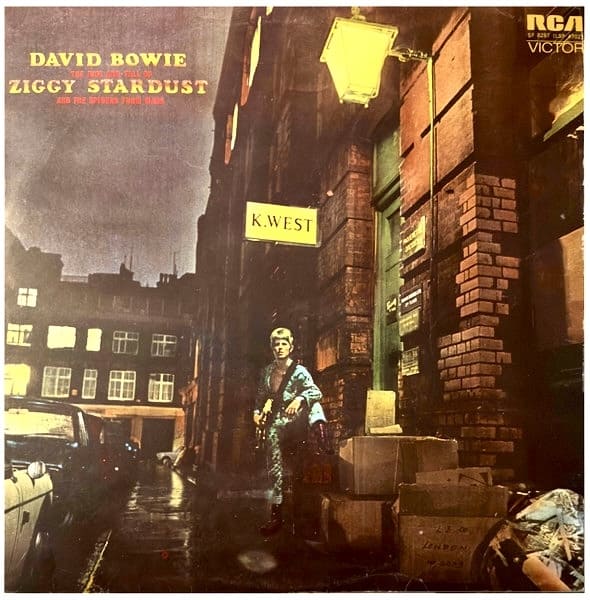
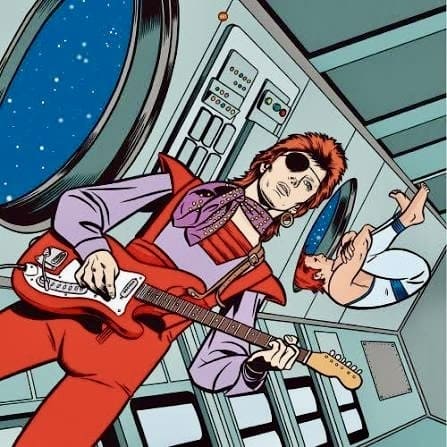
Il concept dell’album “The Rise and Fall of Ziggy Stardust and the Spiders from Mars” era che un profeta alieno, Ziggy Stardust, fosse stato inviato sulla Terra per comunicare che alla Terra rimanevano cinque anni di esistenza, oltre a portare un messaggio di speranza. Ma, come andarono le cose, Ziggy, che suonava la chitarra, divenne una superstar del rock and roll. Che finì distrutto dal suo stesso ego e dal fanatismo dei suoi fan, che lo portarono alla rottura della band.
Il personaggio di Ziggy Stardust
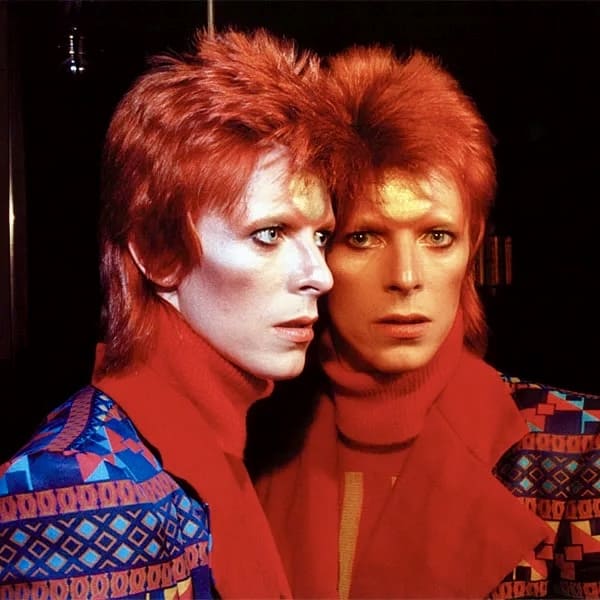
Il personaggio di Ziggy Stardust sarebbe stato utilizzato dal 1972, finché Bowie, a sorpresa, non ritirò il personaggio e la band nell’ottobre del 1973.
Il loro unico album, “The Rise and Fall of Ziggy Stardust and the Spiders from Mars”, fu acclamato dalla critica, raggiungendo il quinto posto nel Regno Unito e il settantacinquesimo negli Stati Uniti.
Le principali fonti di ispirazione per lo sviluppo del personaggio di Ziggy Stardust sono le seguenti: Vince Taylor, rocker britannico degli anni ’50, è spesso citato come modello principale per il personaggio di Ziggy. Taylor, a un certo punto, aveva avuto un crollo mentale causato dalla droga. Bowie si riferiva a Taylor nel 1966, che affermava di essere un incrocio tra un dio e un alieno, in particolare un nuovo messia. Questo fornì a Bowie la narrativa dell’album da “rock star aliena”.
David Bowie Ziggy Stardust
The Stardust Cowboy
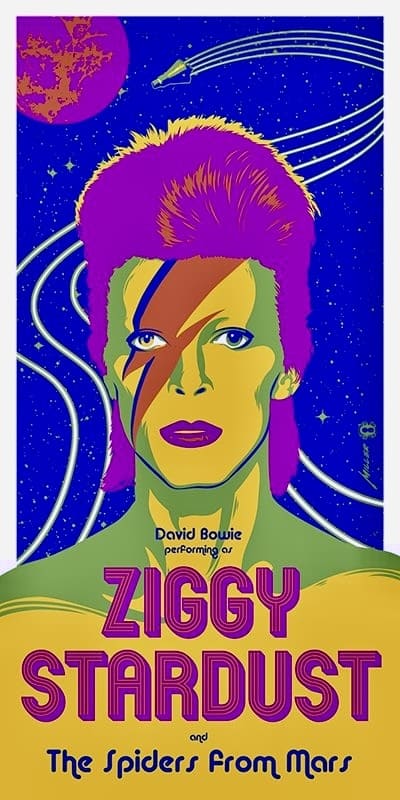
Il leggendario “Stardust Cowboy”, Norman Carl Odam, la cui musica psychobilly a tema spaziale affascinava Bowie, fornì “Stardust” per la seconda metà del nome di Ziggy. Anche Iggy Pop e Lou Reed furono fonte di ispirazione per il personaggio di Ziggie. Bowie infatti fuse l’energia selvaggia e autodistruttiva di Iggy Pop con l’intelligenza da strada dei testi di Lou Reed. Inoltre, uno dei motivi per cui Bowie chiamò il suo personaggio Ziggy fu perché gli ricordava “Iggy”.
L’ispirazione giapponese di David Bowie
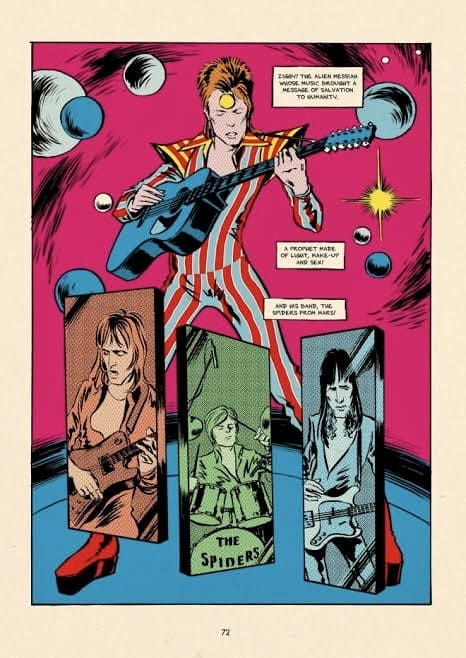
Le radici visive e culturali del personaggio sono state ispirate dal Kabuki e dall’arte giapponese,
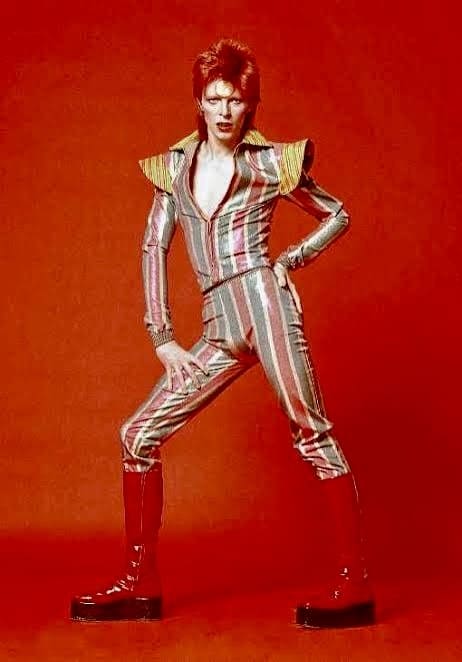
in particolare dallo stilista Kansai Yamamoto, che ha creato molti degli iconici costumi strappabili di Ziggy, ispirati al tradizionale teatro kabuki giapponese. Le tecniche di trucco di Bowie per ottenere il look alieno di Ziggy provengono dalla star giapponese del kabuki Bando Tamasaburo.
“Arancia Meccanica”: il contributo visuale del film
Il film del 1971 “Arancia Meccanica” contribuì anche all’ispirazione per i primi costumi di Bowie e “The Spiders from Mars”, in particolare quelli indossati dai “Droogs” nel film. Mentre il primo nome “Ziggy” trovò conferma nella mente di Bowie quando, passandoci in treno, vide un cartello con la scritta “Ziggy’s” fuori da una sartoria, che gli fece capire che il nome Ziggy era “tutto incentrato sui vestiti”.
Sconosciuto a molti, l’obiettivo filosofico di Bowie quando creò Ziggy Stardust era una reazione al “denim e agli hippy” della fine degli anni ’60. David voleva sostituire la “sincerità rock” con una “rock star di plastica”, una figura androgina e puramente teorica che avrebbe colmato il divario tra performance art e musica pop.
Ziggy Stardust e il successo mondiale di David Bowie
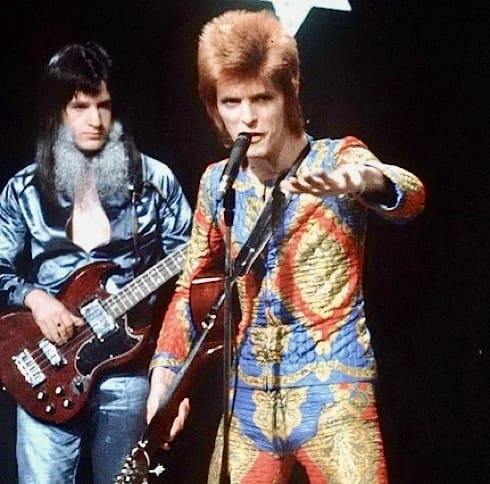
Il tour “Ziggy Stardust and the Spiders from Mars” (1972-1973) fu un imponente tour mondiale di 191 date che trasformò Bowie da una meteora a una superstar internazionale. Il tour promosse gli album di Bowie “Honky Dory”, “The Rise and Fall of Ziggy Stardust and the Spiders from Mars” e “Aladdin Sane”. Bowie fu accompagnato nel tour dagli Spiders from Mars, che comprendevano Mick Ronson (chitarra), Trever Bolder (basso) e Mick “Woody” Woodmansey (batteria). In seguito si unì alla band il pianista Mike Garson, aggiungendo un tocco avant-garde con influenze jazz al sound glam. Il tour iniziò nel febbraio del 1972 al piccolo “Toby Jug Pub” di Tolworth, in Inghilterra, e si trasformò in spettacoli sold-out in Nord America e Giappone. Gli spettacoli presentavano i costumi ispirati al teatro Kabuki di Kansai Yamamoto e coreografie teatrali che sfumavano i confini tra un concerto rock e un’arte performativa.
L’uscita di scena di Ziggy Stardust
La fine improvvisa di “Ziggy Stardust and the Spiders from Mars” avvenne all’Hammersmith Odeon, il 3 luglio 1973. Bowie sconvolse il mondo e la sua band eliminando il personaggio di Ziggy Stardust. L’annuncio arrivò prima del bis finale, “Rock and Roll Suicide”. Bowie disse al
pubblico: “Non solo è l’ultima data del tour, ma è anche l’ultimo concerto che faremo”.
La motivazione principale di Bowie per sciogliere la band fu la sua totale stanchezza dopo 18 mesi di tour quasi ininterrotti, accompagnata da una crisi d’identità. Ammise notoriamente di “essersi perso irrimediabilmente nel personaggio di Ziggy”,
rendendo difficile separare il suo vero io dal personaggio di alieno-messia. Così, nonostante i piani per un tour nel 1974, Bowie, annoiato creativamente e desideroso di intraprendere nuove strade, sciolse la band.
L’ultima apparizione dal vivo
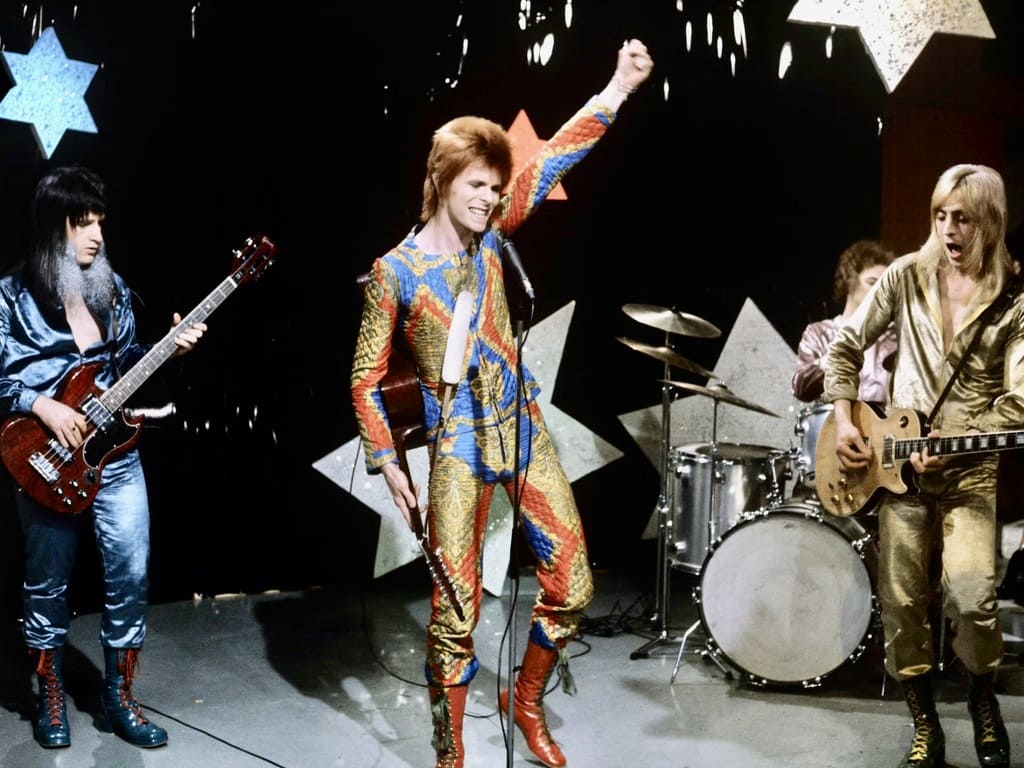
L’ultimo concerto è stato filmato per i posteri da D.A. Pennebaker per il documentario “Ziggy Stardust and the Spiders from Mars”. Se non avete visto il film, non ve lo potete permettere, quindi fate un salto indietro nel tempo fino al 1973 e andate a vederlo.
David Bowie: The Rise and the Fall of Ziggy Stardust and the Spiders from Mars
Ziggy Stardust was David Bowie’s androgynous alien rock persona, that he introduced in 1972, that embodied a messianic figure in a dystopian future. Ziggy, backed by the Spiders from Mars, would go on to define the 1970’s glam rock era, with the release of the album “The Rise and Fall of Ziggy Stardust and The Spiders from Mars”.
David Bowie Ziggy Stardust
The concept of the album
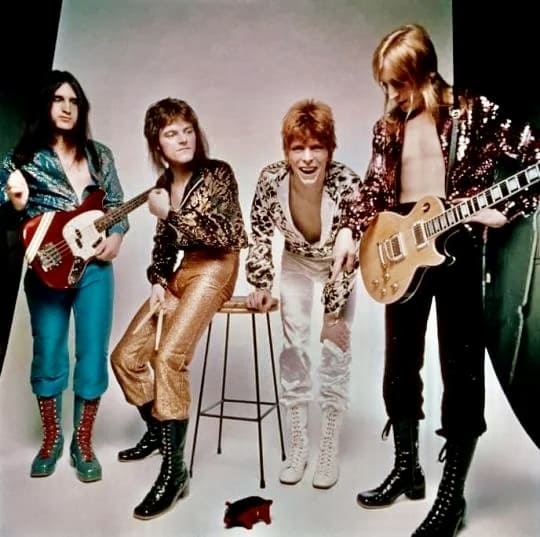
The concept of the album “The Rise and Fall of Ziggy Stardust and the Spiders from Mars” was that an alien prophet, Ziggy Stardust, was sent to Earth, to deliver a message that Earth had five years of existence left, in addition he also came with a message of hope. But as things turned out, Ziggy, who played guitar became a rock and roll superstar. Who ended up destroyed by his own ego, and the fanaticism of his fans, which led to the breakup of the band.
The Ziggy Stardust persona
The Ziggy Stardust persona would be
used from 1972, till Bowie surprisingly retired the character and the band in October 1973.
Their only album “The Rise and Fall of Ziggy Stardust and the Spiders from Mars”, was critically
acclaimed, peaking at number 5 in the UK and number 75 in the US.
The core inspirations for the development of the Ziggy Stardust character are as follows: Vince Taylor a 1950’s British rocker, is often cited as the primary blueprint for the character Ziggy. Taylor at some point had suffered a drug-fueled mental breakdown. Bowie had meant Taylor in 1966. Who claimed he was a cross between a god and an alien, specifically a new messiah. This provided Bowie the album’s “alien rock star” narrative.
The Stardust Cowboy
The legendary “Stardust Cowboy”, Norman Carl Odam who’s space themed psychobilly music fascinated Bowie, provided “Stardust”, for the last half of Ziggy’s name.
Iggy Pop and Lou Reed also were inspirations for the Ziggie character. For Bowie melded the wild, self destructive performance energy of Iggy Pop with the intellectual street smarts of Lou Reed’s lyrics. In addition, one of the reasons, Bowie named his character Ziggy was because it reminded him of “Iggy”.
The Japanese inspiration of Ziggy Stardust
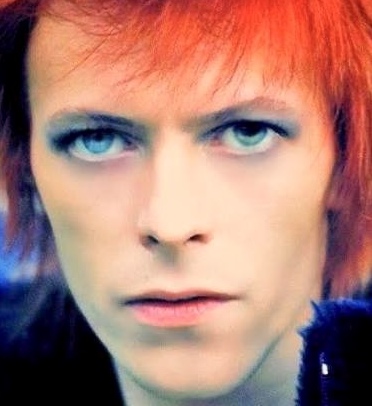
The visual and cultural roots of the character were inspired by: Kabuki and Japanese art,
specifically designer Kansai Yamamoto who created many of Ziggy’s iconic tear-away costumes, that were inspired by traditional Japanese kabuki theatre. Bowie’s makeup techniques to achieve Ziggy’s alien look, would come from Japanese kabuki star Bando Tamasaburo.
“A Clockwork Orange”: the visual inspiration from the film
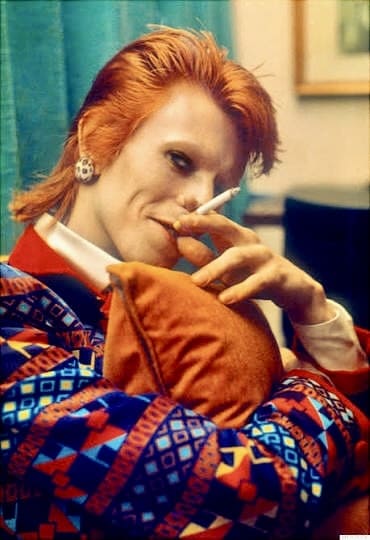
The 1971 movie. “A Clockwork Orange” also contributed to the inspiration of the early costumes for Bowie and “The Spiders from Mars”, especially those costumes worn by the “Droogs” in the movie. While the first name “Ziggy”, was confirmed in Bowie’s mind, when he spotted a sign saying, “Ziggy’s” outside a tailor shop, while passing it by on a train, signaling to him that the name Ziggy, was “all about clothes.”
Unknown to many, Bowie’s philosophical goal when he created Ziggy Stardust, was in reaction against the “denim and hippies” of the late 1960’s. David wanted to replace “rock sincerity” with a “plastic rock star”, a purely theoretical, androgynous figure that would bridge the gap between performance art and pop music.
Ziggy Stardust and the huge international David Bowie’s success
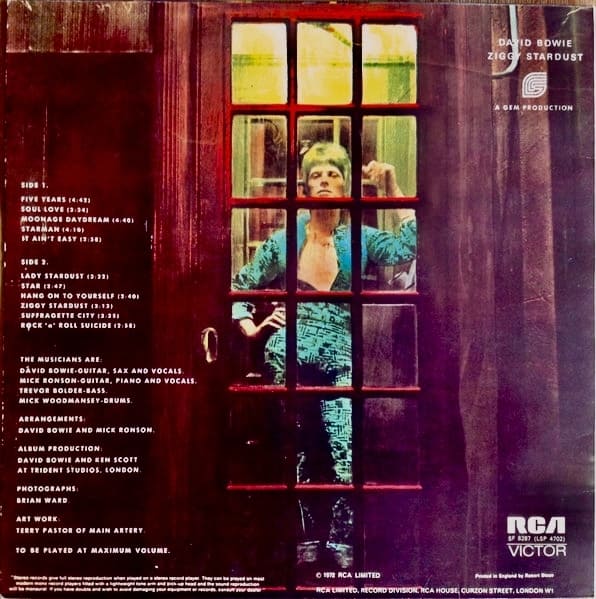
The “Ziggy Stardust and the Spiders from Mars” (1972-1973) tour, was a massive 191 date global trek that transformed Bowie from a one hit wonder into an international superstar. The tour promoted the Bowie albums “Honky Dory”, “The Rise and Fall of Ziggy Stardust and the Spiders from Mars, and Aladdin Sane”. Bowie was backed on the tour by the Spiders from Mars, which featured Mick Ronson (guitar), Trever Bolder (bass), and Mick “Woody” Woodmansey on (drums). Later pianist Mike Garson would join the band, adding a jazz inflected avant-garde edge to the glam sound. The tour began in February of 1972 at the small “Toby Jug Pub” in Tolworth, England, and evolved into sold-out spectacles across North America and Japan. All the shows featured the Kabuki inspired costumes of Kansai Yamamoto, and theatrical choreography that blurred the lines between a rock concert and performance art.
The end of Ziggy Stardust
The sudden end of “Ziggy Stardust and the Spiders from Mars” came at the Hammersmith Odeon, on 3rd of July 1973. When Bowie shocked the world and his own band by killing off the persona of Ziggy Stardust. The announcement came before the final encore, “Rock and Roll Suicide”. When Bowie told the
crowd: “Not only is the the last date of the tour, but it’s the last show that we’ll ever do”.
Bowie’s main motivation for breaking up the band was his
total exhaustion from 18 months of near constant touring, accompanied by his having an identity crisis. He famously admitted that,
“he had gotten hopelessly lost in the character, Ziggy”,
making it difficult to separate his real self from the alien
messiah persona. So despite plans for a 1974 tour. Bowie, creatively bored and wanting to pursue new directions, broke up the band.
The last Ziggy’s concert
That last concert was filmed for posterity by D.A. Pennebaker for the documentary “Ziggy Stardust and the Spiders from Mars”. If you haven’t seen the film, it’s out of sight, so take a trip back to 1973 and check it out.
LEGGI ANCHE:
- They Could be Heroes: David Bowie, Iggy Pop, Robert Fripp e Brian Eno per la trilogia berlinese
- Nuovo libro su David Bowie di Paul Morley: “Oltre lo spazio e il tempo”
- “Born With A Broken Heart” il nuovo singolo da solista di Damiano David
- Cesare Cremonini al lavoro con Mike Garson il leggendario pianista di David Bowie
- Syd Barrett: un enigma musicalmente influente (Italian/English Version)

Ti interessa anche questo?