

King Crimson e l’album di debutto. Un capolavoro britannico d’importazione che, senza passare per la radio, conquistò la controcultura e diede vita al rock progressivo italiano.
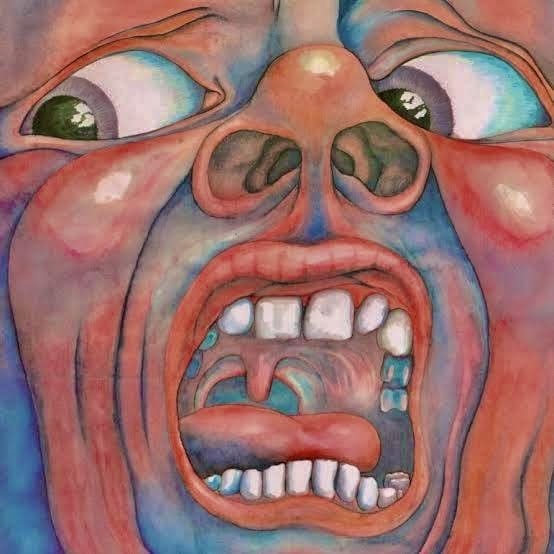
Capitolo 1: L’urlo alla finestra. Entrando in un qualsiasi negozio di dischi italiano alla fine del 1969, ci si trovava subito di fronte a un’immagine di puro sgomento. Affisso alle vetrine c’era un grande poster raffigurante un volto enorme e urlante, dipinto con vivaci acquerelli blu e rosso sangue. Non c’erano il nome della band, né il titolo dell’album, né un singolo radiofonico a spiegarne il significato. Eppure, nel giro di poche settimane, quell’urlatore silenzioso divenne il vessillo non ufficiale della controcultura studentesca italiana. Ancora prima che la band mettesse piede su un palco italiano, un disco britannico aveva già sussurrato una rivoluzione direttamente all’orecchio dei giovani della nazione.
King Crimson e l’album d’esordio In the Court of the Crimson King
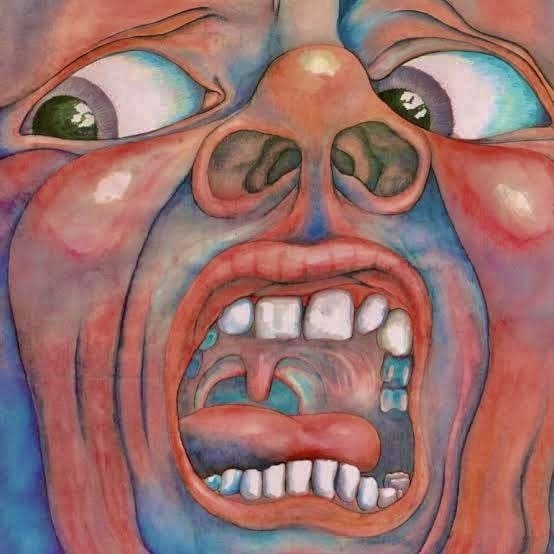
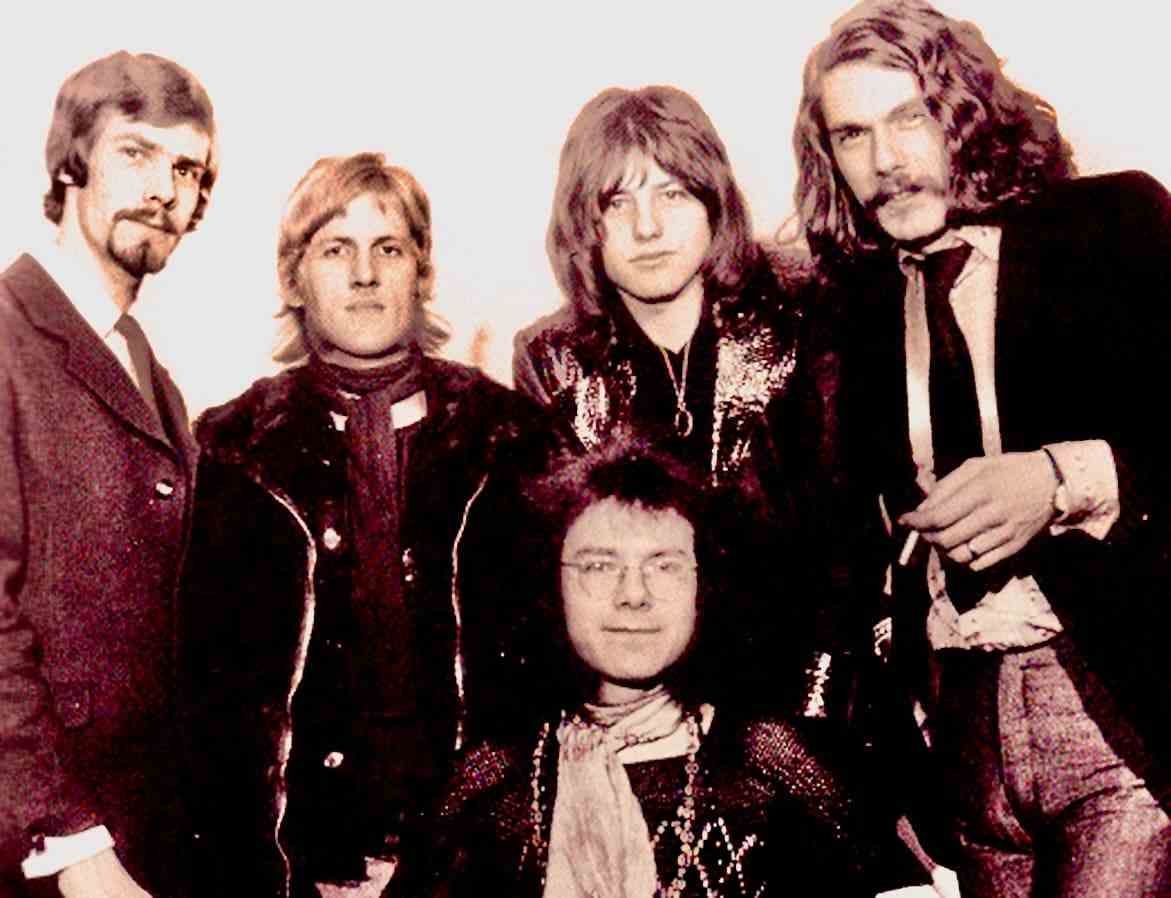
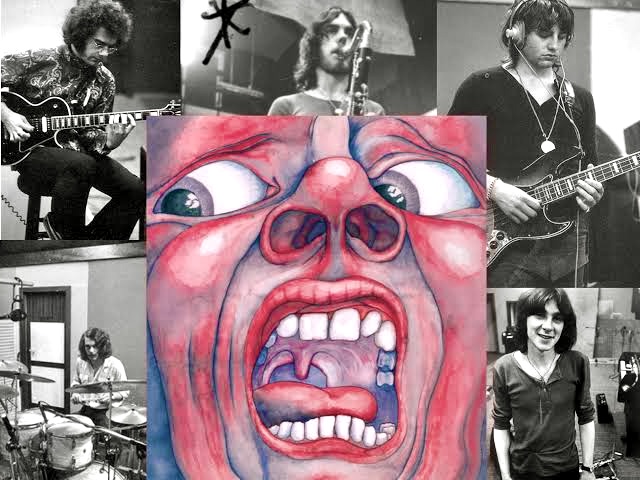
Quando i King Crimson pubblicarono il loro album d’esordio, *In the Court of the Crimson King*, il 10 ottobre 1969, non si limitarono a presentare una nuova band: di fatto, plasmarono il rock progressivo come genere a sé stante. La formazione originale comprendeva Robert Fripp (chitarra), Greg Lake (basso e voce), Ian McDonald (fiati, mellotron), Michael Giles (batteria) e Peter Sinfield (testi). Insieme, sostituirono le strutture di derivazione blues tipiche del rock degli anni Sessanta con una miscela cupa e sofisticata di jazz, musica classica europea e “terrore sinfonico”.
Sebbene l’album avesse riscosso un successo immediato nel Regno Unito e negli Stati Uniti, fu in Italia che ricevette un’accoglienza particolarmente fervente, quasi di natura religiosa. Nonostante la band non avesse effettuato tournée nel Paese fino al 1973, i giovani italiani elessero il disco a manifesto culturale; esso trasformò il mercato italiano — dominato dal pop radiofonico — in un terreno fertile per musicisti ambiziosi, dando vita al genere noto come “Rock Progressivo Italiano” (RPI).
Capitolo 2: L’urlatore silenzioso (La storia dietro la copertina)
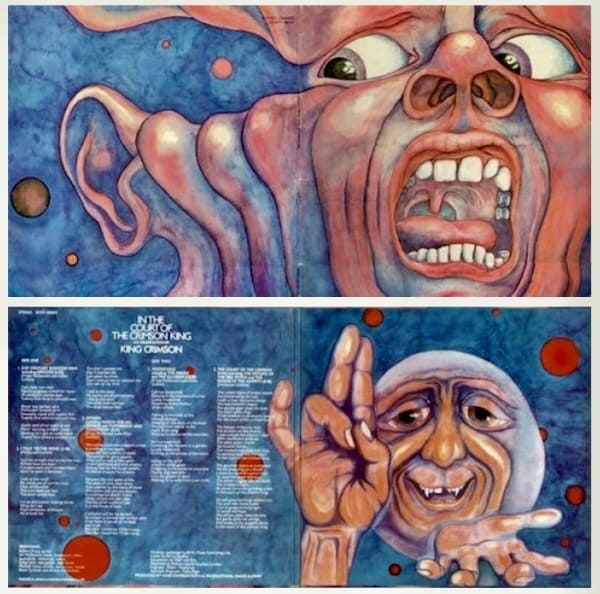
Per comprendere appieno perché “In the Court of the Crimson King” abbia avuto l’impatto di una bomba sulla scena musicale italiana, basta osservarne la copertina. Si tratta probabilmente dell’immagine più celebre nella storia del rock progressivo, eppure cela una storia incredibilmente tragica. Il dipinto fu realizzato da Barry Godber, un programmatore informatico e artista autodidatta di 24 anni, nonché caro amico del paroliere Peter Sinfield. Godber creò l’immagine osservandosi allo specchio ed esasperando i propri lineamenti fino a esprimere un terrore puro e maniacale. Quando Sinfield portò il dipinto in studio, la band rimase letteralmente sbalordita. Il chitarrista Robert Fripp osservò in seguito che il volto urlante in copertina rappresentava esplicitamente il “21st Century Schizoid Man”, mentre aprendo la custodia apribile (gatefold) si rivelava un secondo dipinto: il Crimson King in persona, caratterizzato da un’espressione triste e da un sorriso inquietante e malinconico.
Capitolo 3: Analisi brano per brano e impatto in Italia: 1. “21st Century Schizoid Man”
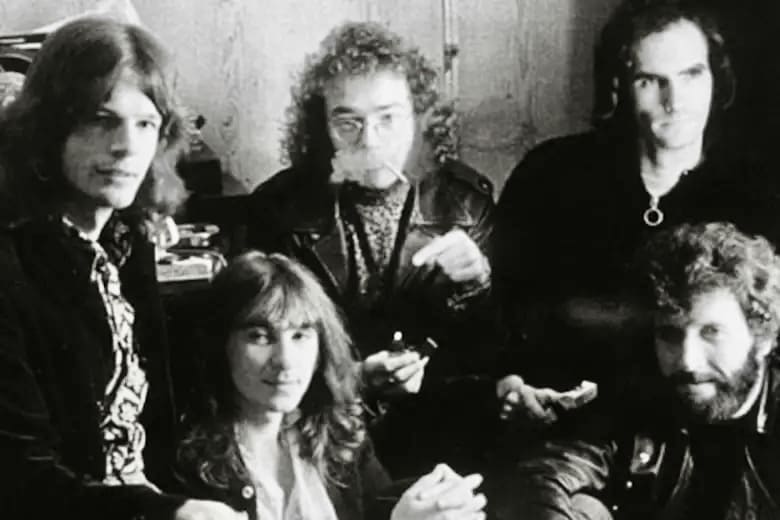
(inclusa “Mirrors”) Il brano: un’esplosione furiosa di proto-metal e jazz-fusion. Alimentato dalla voce paranoica e fortemente distorta di Greg Lake e da un passaggio strumentale all’unisono fulmineo, il brano funge da feroce critica alla guerra del Vietnam e all’alienazione sociale. L’impatto in Italia: Questo brano ha legittimato le rock band italiane a essere aggressive e politicamente esplicite. La sezione centrale jazz-rock, caotica ma iper-precisa, ha influenzato direttamente le strutture strumentali frastagliate e frenetiche di gruppi italiani come gli Area (guidati da Demetrio Stratos) e Il Balletto di Bronzo, i quali compresero che il rock poteva essere al contempo altamente tecnico e politicamente rivoluzionario.
2. “I Talk to the Wind”
Il brano: una serena ballata folk pastorale dominata dal flauto multistrato di Ian McDonald e dalle armonie vocali dolci e ariose tra Lake e McDonald. Offre un contrasto calmo e onirico rispetto alla violenza del brano d’apertura. * L’impatto in Italia: La tradizione classica italiana è profondamente radicata negli strumenti a fiato e nell’opera, rendendo questo brano immediatamente accessibile ai musicisti locali. Band come la Premiata Forneria Marconi (PFM) e i Delerium trassero immediata ispirazione da questa canzone, integrando massicciamente flauti classici e chitarre acustiche nella loro musica rock per creare un sound prog pastorale e tipicamente mediterraneo.
3. “Epitaph” (incluse “March for No Reason” e “Tomorrow and Tomorrow”)
Il brano: un capolavoro malinconico e di ampio respiro, sorretto da un imponente muro sonoro di Mellotron Mk II. Greg Lake offre quella che è forse la sua migliore performance vocale, piangendo il fallimento umano e l’inutilità della guerra su uno sfondo sonoro operistico e carico di presagi funesti. * L’impatto in Italia: “Epitaph” è il padre spirituale dell’intero genere del “Rock Progressivo Italiano”. La sua intensa drammaticità sinfonica e il tono tragico e operistico conquistarono completamente il pubblico italiano. Giganti del prog sinfonico come il Banco del Mutuo Soccorso e il Museo Rosenbach trascorsero gli anni ’70 cercando di emulare la solennità grandiosa e struggente di questo brano, rendendo il Mellotron lo strumento imprescindibile della scena underground italiana.
4. “Moonchild” (inclusi “The Dream” e “The Illusion”)
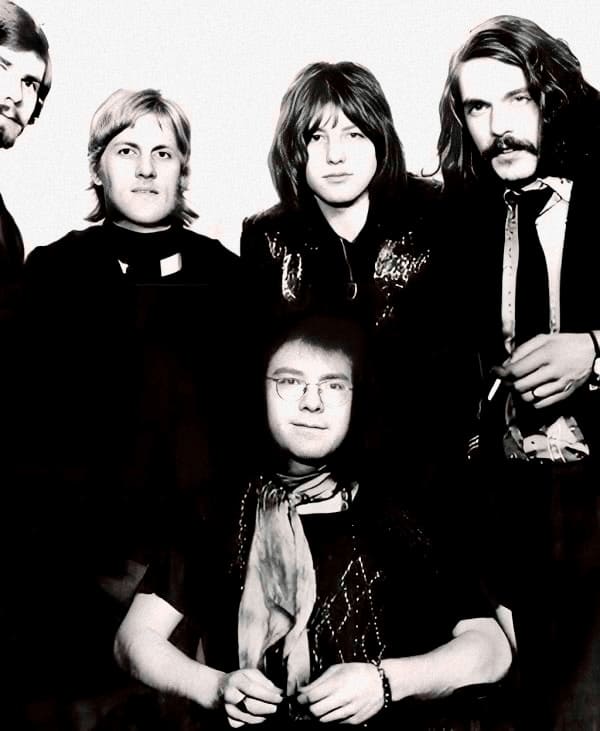
Il brano: Un pezzo diviso in due metà distinte. Inizia come una delicata ed eterea canzone folk psichedelica, per poi dissolversi in un’improvvisazione jazz d’avanguardia di nove minuti a forma libera, caratterizzata da rade note di vibrafono, graffi di chitarra e morbidi crescendo di piatti. * L’impatto in Italia: Sebbene spesso oggetto di dibattito tra la critica mainstream, “Moonchild” ha esercitato una forte influenza sulle scene d’avanguardia e sperimentali italiane. Ha dimostrato ai giovani studenti dei conservatori classici che i brani rock potevano incorporare elementi di arte astratta e non strutturata. Artisti e gruppi come Franco Battiato e il Gruppo di Improvvisazione Nuova Consonanza hanno tratto ispirazione dalla sua audace esplorazione del silenzio e delle tessiture sonore.
5. The Court of the Crimson King (inclusi “The Return of the Fire Witch” e “The Dance of the Puppets”)
Il brano: il finale maestoso e teatrale dell’album. Costruito su un riff di Mellotron incalzante e ciclico di quattro battute, presenta una narrazione dai toni gotici e cinematografici firmata Sinfield ed esplode in un muro sonoro di cori vocali, per poi sfumare in un inquietante intermezzo di fiati. * L’impatto in Italia: Questo brano ha definito la struttura standard della suite tipica dell’album progressive rock. Band come “Le Orme” (in dischi quali *Felona e Sorona*) hanno replicato esattamente questo modello: testi concettuali e fiabeschi uniti a melodie di tastiera grandiose e avvolgenti e a drammatici cambi di dinamica.
Capitolo 4: Voci della rivoluzione (le testimonianze dei musicisti) – Franz Di Cioccio Premiata Forneria Marconi
Le fondamenta sonore gettate da Fripp, Lake e McDonald sconvolsero letteralmente i musicisti più importanti d’Italia; coloro che avrebbero poi definito il genere RPI descrivono l’esperienza del primo ascolto dell’album come una vera e propria rinascita musicale.
Leggi anche: Andrea Bruni: CIAO ROMEO – Storia di un’amicizia a sei zampe. Dal primo all’ultimo abbraccio
Franz Di Cioccio (Batterista/Cantante, Premiata Forneria Marconi – PFM): “Prima dei King Crimson, eravamo turnisti al seguito di cantanti pop e suonavamo arrangiamenti standard da tre minuti. Quando ‘In The Court of the Crimson King’ arrivò a Milano, fu come un fulmine a ciel sereno. Non avevamo mai sentito musicisti rock usare il flauto o il mellotron con quella solennità sinfonica. Ci dimostrarono che la musica classica e il rock non erano nemici. Ciò ci diede il coraggio di cambiare nome, abbandonare il formato radiofonico e scrivere ‘Impressioni di Settembre’. A loro dobbiamo tutta la nostra libertà creativa”.
Vittorio Nocenzi – Banco del Mutuo Soccorso
Vittorio Nocenzi (Tastierista/Fondatore, Banco del Mutuo Soccorso): «Per noi che studiavamo al conservatorio, la musica rock era considerata banale. Ma “Epitaph” cambiò tutto. La drammaticità e l’impronta operistica della voce di Greg Lake, unite alle dense stratificazioni di Mellotron di Ian McDonald, toccavano direttamente il nostro DNA di musicisti classici; sembrava un’opera rock nata da Verdi o Puccini. Era musica potente, ma profondamente intellettuale. Insegnò al Banco come usare due tastiere per costruire paesaggi sonori cupi e teatrali, anziché limitarsi a suonare riff blues».
Tony Pagliuca – Le Orme
Tony Pagliuca (Tastierista, Le Orme): «Prima del 1969 eravamo un gruppo beat che suonava semplice psych-pop. I King Crimson ci costrinsero a ripensare completamente il nostro approccio agli strumenti. Dopo aver ascoltato la title track, capii che la tastiera poteva guidare una rock band con la maestosità di un organo a canne. Riducemmo subito l’organico a un trio incentrato sulle tastiere e registrammo “Collage”. Quel disco non si limitò a influenzare le band: creò in Italia un’intera controcultura che esigeva arte anziché semplice intrattenimento».
Capitolo 5: un’eredità duratura
In definitiva, “In the Court of the Crimson King” ottenne in Italia un risultato unico al mondo: democratizzò la musica classica per la generazione del rock. Unendo il rigore e la raffinatezza di una suite orchestrale alla potenza grezza, all’energia e alla distorsione del rock, i King Crimson dimostrarono a un’intera generazione di giovani italiani – molti dei quali studenti di conservatorio desiderosi di ribellarsi alla vecchia guardia – che non era necessario abbandonare il proprio ricco patrimonio culturale per suonare rock and roll. Si accese così un’epoca d’oro storica per la musica italiana, capace di definire un intero decennio. I King Crimson avevano conquistato la nazione senza mai varcarne i confini. La miccia era stata ufficialmente accesa, preparando il terreno per quel fervore appassionato che avrebbe accolto la band al suo arrivo in Italia, quattro anni più tardi.
HOW KING CRIMSON CONQUERED ITALY: WITH OPERA, MELLOWTRONS, AND SCHIZOID MEN
An imported British Masterpiece that Bypassed Radio, Captured the Counterculture and Birthed Italian Progressive Rock .
Leggi anche: Intervista ad Andrea Bruni del Banco Del Mutuo Soccorso
Chapter 1: The Scream On The Window – Walk into any Italian record boutique in late 1969, and you were immediately confronted by a wall of sheer panic. Pinned to the storefront windows was a master poster of a giant, screaming face painted in brilliant watercolors of blue and blood crimson. There was no band name, no album title, and no radio single to explain it. Yet, within weeks, that silent screamer, became the unofficial flag of Italy’s student counter-culture. Before the band ever stepped foot on an Italian stage, a British record that had already whispered a revolution directly into the ears of a nation’s youth.
King Crimson debut album “In the Court of the Crimson King”
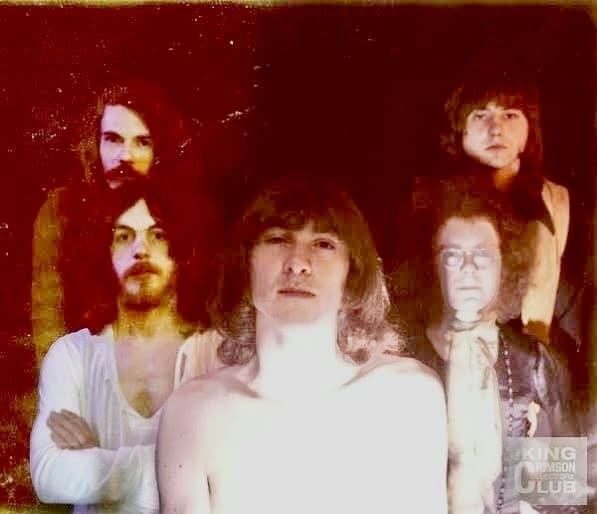
When King Crimson released their debut album, “In the Court of the Crimson King” on October 10, 1969, it did not merely introduce a new band, it fundamentally engineered progressive rock as a distinct genre. The original lineup consisted of Robert Fripp (guitar), Greg Lake (bass and vocals), Ian McDonald (woodwinds, mellotron), Michael Giles (drums), and Peter Sinfield (lyrics). Together, they replaced the blues rooted structures of 1960’s rock with a dark, sophisticated blend of jazz, European classical music, and symphonic terror. While the album was an immediate success in the UK and US, it found its most fanatical, near religious reception in Italy. Despite the band not touring the country till 1973, Italian youth adopted the record as a cultural manifesto. It transformed Italy’s radio friendly pop market into a hotbed for ambitious musicians, entirely birthing the genre known as “Rock Progressivo Italiano (RPI).
Chapter 2: The Silent Screamer (The Artwork Backstory)
To firmly grasp why”In The Court of the Crimson King” felt like a bomb dropping on the Italian music scene, one only has to look at its cover. It is arguably the most famous artwork in progressive rock history, yet it carries an incredibly tragic backstory. The painting was created by Barry Godber, a 24 year old computer programmer and self taught artist who happened to be a close friend of lyricist Peter Sinfield. Godber painted the image by looking at himself in a mirror and exaggerating his features into a state of sheer, manic terror. When Sinfield brought the picture into the studio, the band was completely stunned. Guitarist Robert Fripp later noted that the screaming face on the front cover explicitly represented the “The Twenty First Century Schizoid Man”’ while opening the gatefold revealed a second painting, the Crimson King himself, sporting sad and a haunting, melancholy grin.
Leggi anche: Intervista a Michelangelo Nocenzi – Banco del Mutuo Soccorso
Crucially, the album featured no text, no artist name, and no album title anywhere on the front cover or the spine. It relied entirely on visual shock value. In Italian record stores, store owners blew the image up into massive window posters. To a generation of Italia youth living through intense social and political upheaval, the wide eyed, screaming face became a visual mirror of their own inner alienation and rebellion. Tragically, Godber never got to see the full extent of his impact; he died of a sudden heart attack in February 1970 at just 24 years old, less than a year after the album’s release. The King Crimson cover remains his only surviving work of art.
Chapter 3: Track-by-Track Review & Italian Impact: 1. “21st Century Schizoid Man”
(including “Mirrors”) The Track: An explosive, furious blast of proto-metal and jazz-fusion. Fueled by Greg Lake’s heavily distorted, paranoid vocals and a lightning fast, unison instrumental breakdown, it acts as a blistering critique of the Vietnam War and societal alienation. * The Italian Impact: This track gave Italian rock bands permission to be aggressive and politically vocal. The chaotic hyper-precise jazz-rock midsection directly influenced the jagged, frantic instrumental structures of Italian bands like ‘Area’ (led by Demetrio Stratos) and ll Balletto di Bronzo, who realized rock could be highly technical and politically revolutionary at the same time.
2. “I Talk to the Wind”
The Track: A serene pastoral folk ballad dominated by Ian McDonalds multi-layered flute and gentle, soaring vocal harmonies between Lake and McDonald. It serves as a calm, dreamlike contrast to the violence of the opening track. The Italian Impact: Italy’s classical heritage is deeply rooted in wind instruments and opera, making this track instantly accessible to local musicians. Bands like ‘Premiata Forneria Marconi’ (PFM) and ‘Delerium’ took immediate cues from this song, heavily weaving classical flutes and acoustic guitars into their rock music to create a uniquely Mediterranean, pastoral prog sound.
3. “Epitaph” (including “March for No Reason” and “Tomorrow and Tomorrow”)
The Track: a sprawling, melancholic masterpiece anchored by a massive wall of Mellotron Mk ll. Greg Lake delivers arguably his finest vocal performance, mourning human failure and the futility of war over an operatic, doom-laden sonic landscape. The Italian Impact: “Epitaph” is the spiritual godfather of the entire “Rock Progressivo Italiano” genre. It’s intense, symphonic drama and tragic operatic tone completely captivated Italian audiences. Symphonic prog giants like Banco del Mutuo Soccorso and Museo Rosenbach spent the 1970’s chasing the grand, heartbreaking gravity of this specific track, making the Mellotron the mandatory instrument of the Italian underground.
4. “Moonchild” (including “The Dream” and “The Illusion”)
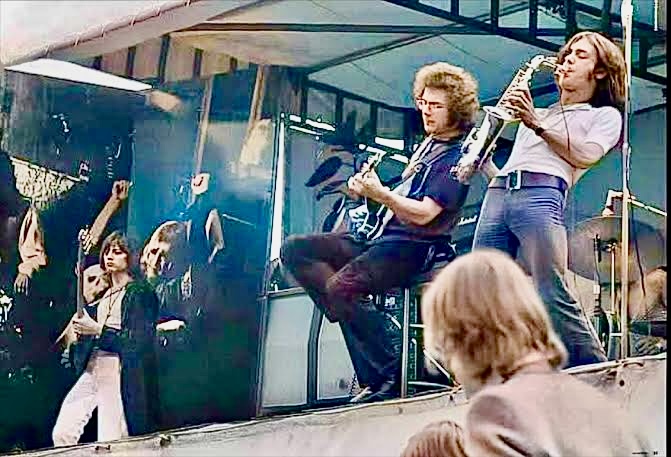
The Track: A track split into two distinct halves. It begins as a delicate, airy psychedelic folk song, before dissolving into a nine minute, completely free-form, avant-garde jazz improvisation consisting of sparse vibraphone plucks, guitar scratches, and quiet cymbal swells.
The Italian Impact: While often debated by mainstream critics, “Moonchild” was highly influential to Italy’s avant-garde and experimental scenes. It proved to young classical conservatory students that rock songs could include unstructured, abstract art. Groups like Franco Battiato and Gruppo di Improvvisazione Nuova Consonanza drew inspiration from its fearless exploration of silence and texture.
5. The Court of the Crimson King (including “The Return of the Fire Witch”and “The Dance of the Puppets”)
Track: The majestic, theatrical finale of the album. Built upon a driving, cyclical, four bar Mellotron riff, it features cinematic, gothic storytelling by Sinfield and explodes into a wall of sound vocal choruses before fading out through an eerie woodwind interlude. The Italian Impact: This track established the standard structure of the classic progressive rock album suite. Bands like. “Le Orme” ( on records like Felona e Sorona) mirrored this exact template: conceptual, fairytale lyrics mixed with grandiose, sweeping keyboard melodies and dramatic dynamic shifts.
Chapter 4: Voices of the Revolution ( the Musicians Testimonials) – Franz Di Cioccio Premiata Forneria Marconi
The sonic blueprints were laid down by Fripp, Lake, and McDonald completely shattered the minds of Italy’s most prominent players the musicians who would go on to define RPI describe the experience of hearing the album for the first time as a literal musical rebirth. Franz Di Cioccio (Drummer/ Vocalist, Premiata Forneria Marconi – PFM) “Before King Crimson, we were session musicians backing pop singers, playing standard three minute arrangements. When ‘In The Court of the Crimson King’ arrived in Milan, it was like a lighting bolt. We had never heard rock musicians use a flute or a mellotron with that kind of symphonic gravity. They showed us that classical music and rock weren’t enemies. It gave us the courage to change our name, throw away the radio format and write ‘Impressioni di Settembre’. We owe our entire conceptual freedom to them”.
Vittorio Nocenzi Banco del Mutuo Soccorso
Vittorio Nocenzi (Keyboardist/Founder, Banco del Mutuo Soccorso) “For those of us studying at the conservatory , rock music was considered trivial. But ‘Epithets’ changed everything. The dramatic, operatic weight of Greg Lake’s vocals combined with Ian McDonald’s dense Mellotron walls directly tapped into our Italian classical DNA, it felt like a rock opera born from Verdi or Puccini. It was heavy, but it was profoundly intellectual. It taught Banco how to use twin keyboards to construct dark, theatrical sonic landscapes rather than just playing blues riffs”.
Tony Pagliuca Le Orme
Tony Pagliuca (Keyboardist, Le Orme) We were a beat group before 1969, playing simple psych-pop. King Crimson forced us to completely rethink our instruments. After hearing the title track, I realized the keyboard could drive a rock band with the majesty of a pipe organ. We immediately striped our sound down to a keyboard-driven trio and recorded ‘Collage’. The record didn’t just influence bands; it created an entire counter-culture in Italy that demanded art over entertainment”.
Chapter 5: The Lasting Legacy

Ultimately ‘In the Court of the Crimson King’ did something in Italy that it didn’t do anywhere else on the planet: it democratized classical music for the rock generation. By marrying the rigor and sophistication of an orchestral suite with the raw volume, energy, and distortion of rock, King Crimson showed an entire generation of Italian youth, many of whom were classical conservatory students looking to rebel against the old guard, that they didn’t have to throw away their rich cultural heritage to play rock and roll. It sparked an historic, golden age of domestic Italian music that completely defined an entire decade. King Crimson had conquered the nation without flying a single mile across its borders. The fuse was officially lit. Laying the groundwork for the feverish madness that would welcome the band when they finally landed on Italian soil four years later.
Altro per te
 progressive
27 Febbraio 2026: Il Banco del Mutuo Soccorso in concerto al Teatro Ventidio Basso
Il 27 febbraio 2026 Il Banco del Mutuo Soccorso farà tappa ad Ascoli Piceno per un appuntamento speciale nello storico Teatro Ventidio Basso, una…
 COMPAGNO DI BANCO – Il diario di bordo Andrea Bruni del Banco del Mutuo Soccorso – 4a puntata
 Compagno di Banco – Banco del Mutuo Soccorso Tour Episodio 3 (seconda parte)
 Compagno di Banco: Andrea Bruni in tour con il Banco del Mutuo Soccorso Episodio 3 – Prima Parte
 Compagno di Banco: Andrea Bruni e il concerto del Banco del Mutuo Soccorso a Roma
 Compagno di Banco: Andrea Bruni del Banco del Mutuo Soccorso – A Padova con New Trolls e Le Orme
 Banco del Mutuo Soccorso, Of New Trolls e Le Orme Live – Una Storia Unica: Il ritorno dei giganti del prog italiano
 Compagno di Banco: Andrea Bruni e il tour del Banco del Mutuo Soccorso Teatro Dehon Bologna – Parte 2
Su eBay: King crimson




Link affiliati: se acquisti, BACKdigit riceve una piccola commissione senza costi per te.