
Radio Online

Artemisia e i ciottoli: Le cronache del Broken Arrow Ranch Vol. 2 – Parte 1
Artemisia e i ciottoli: Le cronache del Broken Arrow Ranch
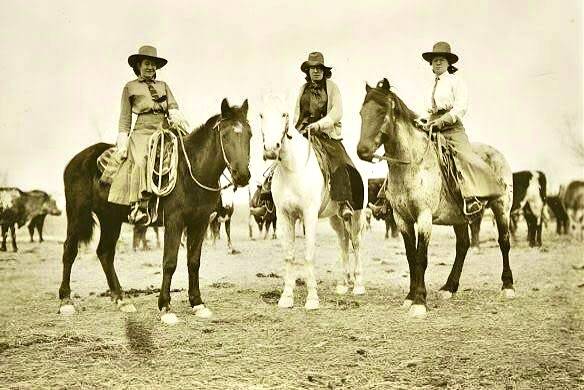
Capitolo 1: La brina sui binari
L’inverno del 1924 non si limitò ad arrivare nel Nord Dakota: lo sommerse. Fuori, il vento ululava attraverso le pianure, tagliente al punto da mozzare il respiro. Ma all’interno della piccola baita di tronchi, l’aria profumava di pino che bruciava, di ghisa rovente e di coperte di lana. Quella baita non poggiava su fondamenta di pietra; riposava su pesanti traversine di legno, una sorta di arca artigianale costruita per sopravvivere agli accumuli di neve del Nord Dakota. Ogni mattina, Edward Casey – che un tempo guidava enormi tram trainati da cavalli lungo le strade asfaltate e affollate di Philadelphia – usciva nell’oscurità gelida. Con mani indurite e abituate al lavoro, attaccava una pariglia di possenti cavalli da tiro alla parte anteriore della slitta. “Tutti a bordo”, gridava Edward, mentre la sua voce si trasformava in una nuvoletta di vapore bianco. La sua impeccabile divisa da tranviere cittadino era sparita, sostituita da un pesante cappotto di montone, ma l’autorità ferma del capotreno era rimasta intatta.
Il giovane John e suo fratello maggiore Edward Jr.
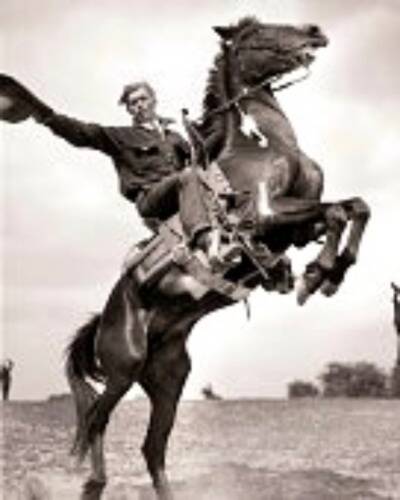
Il giovane John, nato a Philadelphia nel 1918, e suo fratello maggiore Edward Jr. — di quattro anni più grande — si precipitavano all’interno, tirando a sé la pesante porta di legno per chiuderla contro il vento. La cabina era minuscola, appena sufficiente a ospitare una panca e una piccola stufa di ghisa nera, panciuta e saldamente imbullonata al pavimento. Quando i cavalli si spingevano in avanti con tutto il loro peso, i pattini della slitta emettevano un forte scricchiolio di protesta contro il ghiaccio e la cabina iniziava a scivolare dolcemente sulla neve. All’interno, era un rifugio in movimento. John sedeva vicino alla stufa, osservando il bagliore rosso delle braci attraverso la grata di ferro e percependo il dolce, ritmico dondolio della cabina mentre superava i cumuli di neve lungo il tragitto verso la scuola a stanza unica. Si sentiva al sicuro. Si sentiva protetto da qualcosa di indistruttibile. Finché John non tergeva via un cerchio di brina dal piccolo finestrino per guardare fuori, verso la distesa selvaggia e innevata. I cavalli rallentavano, ansimando pesantemente; gli zoccoli scricchiolavano rompendo la crosta di un profondo cumulo di neve, vicino ai confini della riserva indiana. Lì, sotto un cielo spazzato dalla tempesta, John li vide. Due figure giacevano semisepolte in un cumulo di neve a bordo pista. Erano nativi americani, sorpresi durante la notte dall’improvviso, spietato calo della temperatura. La neve trasportata dal vento si era accumulata contro le loro coperte di lana, ormai rigide e gelate, come onde che si infrangono su una scogliera in quel paesaggio innevato e desolato. Agli occhi del giovane John, non sembravano più persone; parevano statue abbandonate dalla tempesta, perfettamente immobili, che si confondevano con il paesaggio bianco. John fissava la scena, con il viso premuto contro il vetro. All’interno della cabina, la stufa a legna scoppiettava, emanando un’ondata di calore intenso e secco. Fuori, a pochi centimetri di distanza oltre le pareti di legno, c’era un mondo così gelido da bloccare la vita nel suo stesso cammino.
Il fumo della loro piccola canna fumaria si disperdeva all’indietro sulla neve…
Guardò il fratello, poi alzò lo sguardo verso la parte anteriore, dove il padre teneva le redini, guidandoli al sicuro attraverso il cimitero della prateria. La slitta continuava ad avanzare. Il fumo della loro piccola canna fumaria si disperdeva all’indietro sulla neve, una sottile linea grigia che collegava l’accogliente tepore della loro sopravvivenza alla vasta e spietata frontiera.
Capitolo 2: Il raduno alle rapide
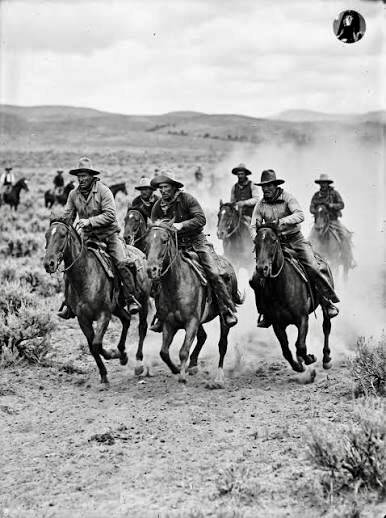
La primavera del Nord Dakota non arrivava dolcemente; irrompeva nella prateria, trasformando le pesanti nevi invernali in torrenti impetuosi e carichi di fango. Il fiume Knife era straripato, trasformando un punto di guado poco profondo in una trappola vorticosa di acque bianche e tronchi alla deriva. Edward Casey stava in piedi sulla riva fangosa, con gli stivali che affondavano nell’argilla. Stringeva le redini di due enormi cavalli da tiro, con le nocche bianche per la tensione. Al centro delle rapide impetuose, un giovane puledro della mandria del ranch era scivolato. La corrente del fiume stava sbattendo l’animale, in preda al panico, contro un ammasso di pioppi caduti. Il puledro nitriva disperatamente, le narici dilatate dal terrore e gli zoccoli che scalciavano alla cieca mentre l’acqua minacciava di trascinarlo a fondo. “È bloccato, Ed! La corrente gli ha incastrato il posteriore contro i tronchi!” gridò Dan Skelly sovrastando il fragore dell’acqua. Edward guardò il fiume; il suo istinto di cittadino gli urlava di restare indietro. A Philadelphia, un’emergenza significava un freno bloccato o un tram deragliato: problemi che si risolvevano con una chiave inglese e una squadra di operai addetti ai binari. Qui, alla natura non importava nulla della meccanica.
Il suo sguardo cadde su una pesante trave di legno…
“Non possiamo entrarci a cavallo, Dan! I cavalli perderebbero l’equilibrio e perderemmo anche loro!” rispose urlando Edward. Dan non rispose. Si stava già muovendo, scrutando la riva con sguardo calmo e acuto. Dan era il fratello di Beatrice, un uomo alto e silenzioso, quasi un’ombra, che lavorava con loro al ranch Broken Arrow. Non sembrava più un comune bracciante di ranch; sembrava un uomo intento a risolvere un enigma.
Il suo sguardo cadde su una pesante trave di legno, scartata da una vecchia recinzione sulla riva, e poi sulla spessa corda da lazo arrotolata al fianco.
“Ed! Porta la pariglia fino a quel grosso masso!” ordinò Dan. “Non entreremo in acqua. Useremo la leva!” Con sorprendente rapidità, Dan trascinò la pesante trave fino al bordo dell’acqua.
La incastrò a fondo tra due rocce vicino alla riva, creando una leva di fortuna contro la corrente impetuosa. Formò con il lazo un ampio cappio appesantito, si avvicinò al bordo del torrente fangoso e lanciò. La corda sibilò nell’aria, calando perfettamente sulla testa e sulle spalle del puledro intrappolato.
Edward si mosse con la precisione esperta dei tempi in cui guidava i tram…
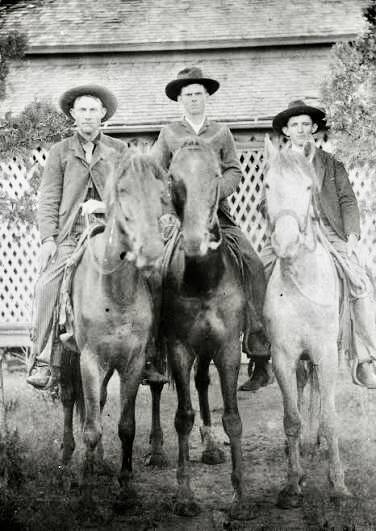
“Edward, aggancia l’altra estremità alla pariglia! Subito!” gridò Dan, facendo forza con tutto il peso sulla leva di legno per modificare l’angolazione della corda ed evitare di soffocare l’animale. Edward si mosse con la precisione esperta dei tempi in cui guidava i tram. Sapeva esattamente quanto peso una pariglia di cavalli potesse trainare se correttamente allineata. Fece indietreggiare i massicci cavalli da tiro, assicurò la fune al pesante finimento in cuoio e afferrò le redini.
“Calmi, ragazzi,” disse Edward con voce dolce, abbassandola su quel tono ritmico e rassicurante che usava sulle linee dei tram cittadini. “Avanti piano. Con calma”. I cavalli da tiro affondarono gli zoccoli pesanti nel fango scivoloso. La corda si tese come una corda di pianoforte. Dan, facendo forza sulla trave di legno, guidava la fune sfruttando l’effetto leva per sollevare la parte anteriore del puledro e scavalcare i tronchi che lo bloccavano. Per un istante terrificante, il fragore dell’acqua aumentò, ma le mani ferme di Edward mantennero la pariglia in trazione, con un’angolazione perfetta e costante.
Il puledro fu liberato dalle macerie…
Con un enorme sforzo, il puledro fu liberato dalle macerie. Si fece strada annaspando e tremando attraverso il torrente, finché i suoi zoccoli non toccarono il fango solido della riva: era salvo e vivo. Dan si accasciò sull’erba, col petto che si alzava e abbassava affannosamente, mentre un raro sorriso gli illuminava il volto sporco di terra. Edward si avvicinò con la squadra di cavalli, asciugandosi il sudore e gli schizzi del fiume dalla fronte. Guardò il puledro e poi Dan, profondamente colpito dalla prontezza di spirito del giovane.
Edward sorrise e diede una pacca sulla spalla a Dan. “Dan, hai mai pensato di aprire un ranch tutto tuo?” Dan alzò lo sguardo, socchiudendo gli occhi sotto il sole accecante della prateria, come se quel pensiero non gli avesse mai nemmeno sfiorato la mente fino a quel preciso istante. Volse lo sguardo verso l’orizzonte vasto e infinito, a ovest.
“Non ci avevo mai pensato,” rispose Dan a bassa voce, con una scintilla di improvvisa, ardente ambizione nel tono. “Il ranch di Dan Skelly… lo chiamerò Ballymahon. Come il nostro paese d’origine in Irlanda.”
Capitolo 3: Il salotto nella prateria
Capitolo 3: Il salotto nella prateria. Mentre gli uomini lottavano contro il fiume, Beatrice Casey combatteva contro la polvere.
Per i proprietari del Broken Arrow, lei era semplicemente “B”, la governante irlandese, riservata e instancabile, che gestiva la casa padronale. Ma per la sua famiglia, lei era il punto fermo. A Philadelphia, Beatrice andava molto fiera della sua casa pulita e ordinata. Amava i pavimenti in legno lucido, le tende di pizzo e il profumo del tè fresco che si preparava su un affidabile fornello a gas.
Il Nord Dakota rappresentava un nemico completamente diverso. Il vento era un ospite costante: si insinuava attraverso le minuscole fessure delle pareti di tronchi, depositando una polvere grigia e sottile su ogni cosa che lei toccava.
Ma B si rifiutava di lasciare che la natura selvaggia la trasformasse in una donna rozza…
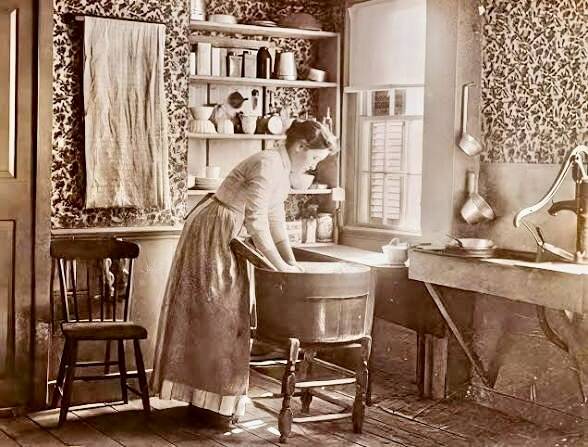
Ogni mattina, prima dell’alba, B si allacciava in vita un grembiule pulito e accendeva la stufa a legna in cucina. La sua giornata era un ciclo incessante di duro lavoro. Trasportava pesanti secchi di ferro pieni d’acqua dal pozzo esterno; le sue braccia si facevano snelle e muscolose sotto quel peso. Strofinava i pesanti indumenti di lana dei mandriani su una tavola da lavaggio, finché le nocche non diventavano rosse e scorticate.
Ma B si rifiutava di lasciare che la natura selvaggia la trasformasse in una donna rozza. Nell’angolo della piccola stanza assegnata alla sua famiglia, aveva allestito un piccolo, scintillante santuario. Sopra una cassa di legno grezzo, aveva steso un candido centrino di pizzo bianco, portato fin da Philadelphia. Vi poggiava sopra una tazzina da tè in porcellana, proveniente dal servizio che sua madre possedeva in Irlanda. Per quanto dura fosse la giornata, o con quanta violenza il vento facesse tremare i vetri delle finestre, B si concedeva dieci minuti di pausa nel pomeriggio. Si versava una tazza di tè nero, stringeva la delicata porcellana tra le mani segnate dal lavoro e chiudeva gli occhi.
“Niente indiani selvaggi in questa casa”…
In quei dieci minuti, non era più una donna di casa in un territorio solitario e remoto; era Beatrice Skelly di Ballymahon, una donna dignitosa e aggraziata. Quando i piccoli John ed Edward Jr. irrompevano in casa, portando fango e lamentandosi del freddo pungente o del caldo torrido, B li avvolgeva subito nel suo grembiule. Puliva i loro volti con un panno umido, con un tocco gentile ma fermo. “Niente indiani selvaggi in questa casa”, diceva con la sua marcata e affettuosa cadenza irlandese, usando quelle parole come un modo ostinato per impedire che il caos della frontiera corrompesse le buone maniere dei suoi figli. “Sedetevi composti. Mangiate il pane.” Si prendeva cura della loro pulizia e della loro alimentazione e, soprattutto, faceva in modo che mantenessero modi civili. Lì, dove la vita poteva essere spezzata da un’improvvisa bufera o dalla corrente impetuosa di un fiume, il lavoro domestico di B non si limitava alle semplici faccende. Era una silenziosa dichiarazione quotidiana: la famiglia Casey apparteneva a un mondo fatto di ordine, amore e calore domestico, per quanto lontano si fossero spinti nella natura selvaggia.
Sagebrush and Cabblestone: The Chronicles of Broken Arrow Ranch
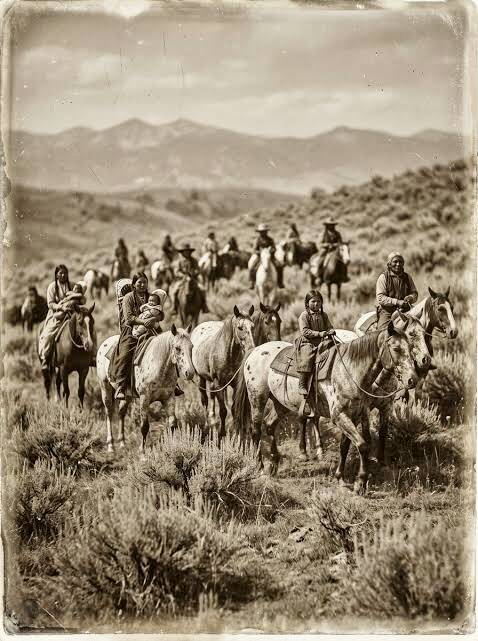
Chapter 1: The Frost on the Rails:
The winter of 1924 didn’t just fall upon North Dakota; it buried it. Outside, the wind howled across the plains, sharp enough to cut a man’s breath in half. But inside the little log cabin, it smelled of burning pine, hot cast iron, and wool blankets.
This cabin didn’t sit on a stone foundation. It rested on heavy wooden rails, a homemade ark built to survive the North Dakota snowdrifts. Every morning, Edward Casey, who used to guide massive horse drawn trolleys through the paved, crowded streets of Philadelphia would step out into the freezing dark. With long practiced, hardened hands, he would hitch a team of heavy draft horses to the front of the sled. “All aboard,” Edward would call out, his voice a puff of white steam. His crisp city transit uniform was gone, replaced by a heavy sheepskin overcoat, but the steady authority of a conductor remained.
Young John and his older brother Edward…
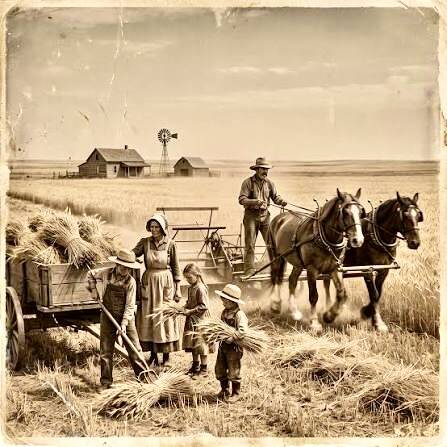
Young John, who had been born in Philadelphia in 1918, and his older brother, Edward Jr., who was four years older, would scramble inside, pulling the heavy wooden door shut against the wind. The cabin was tiny, just big enough for a bench and a small, black potbelly stove bolted securely to the floorboards. As the horses threw their weight into it, the sled rails would give a loud, protesting crack against the ice, and the cabin would begin to glide smoothly over the snow. Inside, it was a moving sanctuary. John would sit close to the stove, watching the red glow of the embers through the iron grate, feeling the gentle, rhythmic sway of the cabin as it crested the drifts on the way to the one room schoolhouse. It felt safe. It felt indestructible.Until John wiped a circle of frost from the small glass window to look out at the snowbound wilderness. The horses slowed, breathing heavily, their hooves crunching through the crust of a deep drift near the edge of the Indian reservation. There, beneath the storm washed heavens, John saw them.
They were Native Americans…
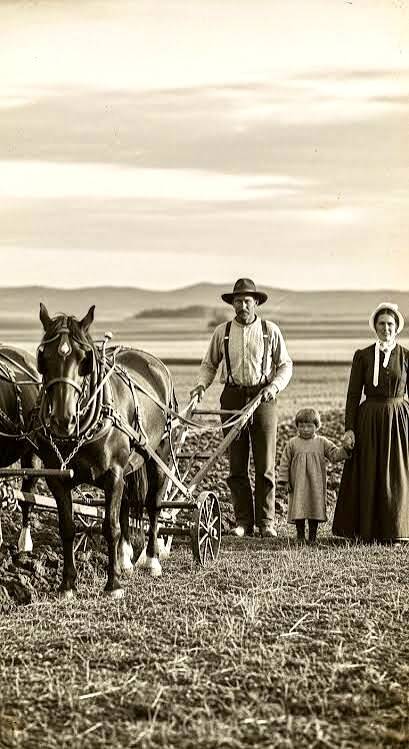
Two figures laying half-buried in a snowdrift by the side of the trail. They were Native Americans, caught overnight by the sudden, merciless drop in temperature. The drifting snow had piled against their stiff, frozen wool blankets like waves against a reef in the snowbound wilderness. To young John, they didn’t look like people anymore; they looked like statues left behind
by the storm, perfectly still, fading into the white landscape.
John stared, his face pressed close to the glass. Inside the cabin, the wood stove crackled, throwing out a wave of fierce, dry heat. Outside, just inches away through the timber walls, was a world so cold it stopped life in midstride. He looked at his brother, then up toward the front where his father held the reins, guiding them safely through the graveyard of the prairie.
The sled kept moving. The smoke from their little chimney drifted back over the snow, a thin grey line connecting the cozy warmth of their survival to the vast, unforgiving frontier.
Chapter 2: The Gathering at the Rapids
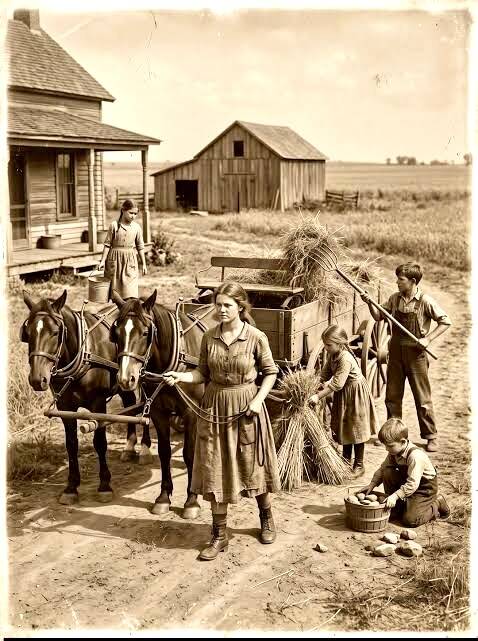
The North Dakota spring did not arrive gently; it tore through the prairies, melting the heavy winter snows into raging, mud choked torrents. The Knife River had burst its banks, turning a shallow crossing into a churning trap of white water and floating timber.
Edward Casey stood on the muddy bank, his boots sinking into the clay. He held the reins of two massive draft horses, his knuckles white. Out in the middle of the rushing rapids, a young colt from the ranch’s herd had slipped. The river’s current was slamming the panicked animal against a wedge of fallen cottonwood trees. The colt
was screaming, its nostrils flared with terror, its hooves kicking blindly as the water threatened to pull it under. “He’s pinned, Ed! The current’s got his hindquarters jammed against the timber!” Dan Skelly shouted over the roar of the water. Edward looked at the river, his city bred instincts screaming at him to stay back. In Philadelphia, a crisis meant a jammed brake or a derailed trolley car, problems you solved with a wrench and a crew of trackmen. Out here, nature didn’t care about mechanics.
He was already moving, his eyes scanning the shoreline with a quiet, sharp focus…
“We can’t ride in there, Dan! The horses will lose their footing and we’ll lose them too!”
Edward yelled back. Dan didn’t answer. He was already moving, his eyes scanning the shoreline with a quiet, sharp focus. Dan was Beatrice’s brother, a quiet, tall shadow of a man who worked on the Broken Arrow ranch with them. He didn’t look like a standard ranch hand anymore; he looked like a man solving a puzzle. His gaze landed on a heavy, discarded wooden timber from an old fence line up on the bank, and then down to the thick lasso rope coiled at his hip.
“Ed! Bring the team up to that high boulder!” Dan commanded. “We aren’t going into
the water. We’re going to use leverage!” With astonishing speed, Dan hauled the heavy fence timber down to the water’s edge.
He wedged it deep between two rocks near the shore, creating a makeshift prybar against the rushing current. He tied his lasso into a wide, weighted loop, stepped right to the edge of the muddy torrent, and swung. The rope hissed through the air, landing perfectly over the trapped colt’s head and shoulders. “Edward, hitch the other end to the team! Now!” Dan yelled, throwing his weight against his wooden lever to redirect the rope’s angle so it wouldn’t choke the animal. Edward moved with the practiced precision of his streetcar days. He knew exactly how much weight a team of horses could pull when properly aligned. He backed the massive draft horses up, secured the line to the heavy leather harness, and gripped the lead reins.
The draft horses dug their heavy hooves into the slick mud…
“Steady, boys,” Edward cooed, his voice dropping into the rhythmic, calming tone he used to use on the city trolley lines. “Walk it out. Easy now.” The draft horses dug their heavy hooves into the slick mud. The rope went taut as a piano wire. Dan, straining against the wooden timber, guided the line, using the leverage to lift the colt’s front quarters up and over the trapping logs. For a terrifying second, the water roared louder, but Edward’s steady hands kept the team pulling at a perfect, unbroken angle. With a massive heave, the colt was pulled free of the debris. It scrambled through the stream , gasping and shivering, until its hooves hit the solid mud of the riverbank, safe and alive. Dan collapsed onto the grass, his chest heaving, a rare, dirt streaked grin breaking across his face. Edward walked the team over, wiping the sweat and river spray from his own forehead. He looked at the colt, then down at Dan, deeply impressed by the younger man’s quick thinking.
Edward smiled and clapped Dan on the shoulder. “Dan, have you ever considered starting your own ranch?”
Dan looked up, blinking against the bright prairie sun, as if the thought had never even crossed his mind until that exact second. He looked out over the vast, endless horizon
toward the west. “Never thought of that,” Dan replied softly, his voice carrying a sudden, fierce spark of
ambition. “Dan Skelly’s Horse Ranch, I’ll call it Ballymahon. After our home village in Ireland.”
Chapter 3: The Parlor in the Prairie
While the men fought the river, Beatrice Casey fought the dust.
To the Broken Arrow’s owners, she was just “B,” the quiet, hardworking Irish housekeeper who kept the main house running. But to her family, she was the anchor. In Philadelphia, Beatrice had taken immense pride in her clean, orderly home. She loved the polished wooden floors, the lace curtains, and the smell of fresh tea brewing on a reliable gas stove. North Dakota was an entirely different enemy. The wind was a constant guest, forcing
its way through the microscopic gaps in the log walls, leaving a fine, grey powder over everything she touched.
Every morning before dawn, B would tie a clean apron around her waist and light the wood burning range in the kitchen. Her day was a relentless cycle of heavy labor. She hauled massive iron buckets of water from the outdoor well, her arms growing lean and muscled from the weight. She scrubbed the heavy woolen work clothes of the ranch hands on a washboard until her knuckles were red and raw.
B would sit down for ten minutes in the afternoon…
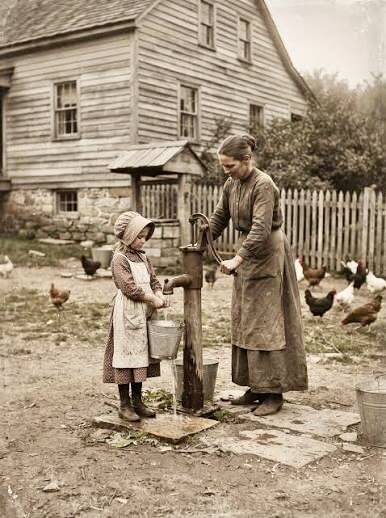
But B refused to let the wilderness turn her into a savage.
In the corner of the small room assigned to her family, she had set up a small, gleaming sanctuary. On top of a rough hewn wooden crate, she had laid a pristine, white lacedoily brought all the way from Philadelphia. Atop it sat a small, porcelain teacup from her mother’s set in Ireland. No matter how hard the day was, or how violently the wind rattled the windowpanes, B would sit down for ten minutes in the afternoon. She would pour a cup of black tea,
hold the delicate porcelain in her calloused hands, and close her eyes. In those ten minutes, she wasn’t a housekeeper in a lonely, isolated territory; she was Beatrice Skelly of Ballymahon, a woman of dignity and grace. When little John and Edward Jr. would burst through the door, tracking mud and complaining about the bitter cold or the blazing heat, B would instantly wrap them in her apron. She would wipe their faces with a damp cloth, her touch gentle but firm.
“There’ll be no wild Indians inside this house”…
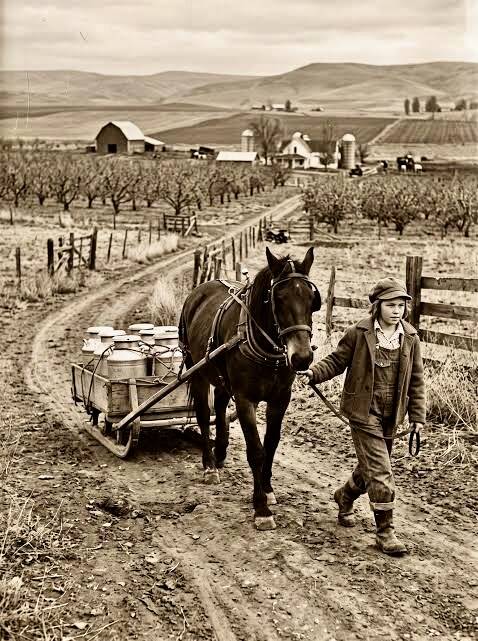
“There’ll be no wild Indians inside this house,” she would say with a sharp, loving Irish lilt, using the phrase as her own stubborn way of keeping the chaos of the frontier from invading her children’s manners. “Sit down properly. Eat your bread.”
She kept the boys clean, she kept them fed, and most importantly, she kept them
civilized. Out here, where life could be snuffed out by a sudden blizzard or a rushing river, B’s housekeeping wasn’t just about chores. It was a daily, silent declaration that the Casey family belonged to a world of order, love, and home, no matter how far into the wild they had traveled.
Altro per te
 Lifestyle
Axel Witsel: il bello dei Mondiali Fifa 2026 tra calcio, famiglia e uno stile che non passa inosservato
I riflettori dei Mondiali Fifa 2026 non si accendono soltanto per illuminare le prodezze tattiche sul terreno di gioco, ma anche per catturare le…
 La famiglia Panini – L’avventura delle figurine: Serena Rossi racconta la serie – Rai 1
 INPS: presentato il nuovo Portale della Famiglia e della Genitorialità
 Tempi Supplementari: Sullo stesso ghiaccio dei sentimenti, tra riscatto, famiglia e nuove possibilità su RAI 1
 Togliamo questi dolci mici dalla strada e diamogli una famiglia
 I Mici di Lory: tanti bellissimi gattini bisognosi di famiglia e amore
 Just an Illusion – La mia famiglia quasi perfetta: Festa del cinema di Roma 2026
 Le cronache dei vampiri di Emily Barrett: lo spettro nella quercia – Parte 1