
Radio Online

Smells Like Spaghetti Western: L’Evoluzione italiana dei Nirvana
Nirvana (LINK): come un trio punk di Seattle ha conquistato la passione dell’Italia.
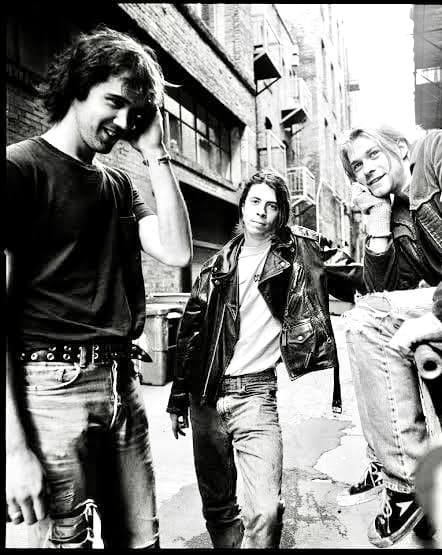
Introduzione: Il crogiolo italiano: La storia dei Nirvana in Italia rappresenta un microcosmo perfetto di una delle trasformazioni più fulminee e turbolente nella storia del rock. In soli due anni, la band si è evoluta da gruppo punk underground squattrinato a fenomeno culturale capace di riempire gli stadi. Osservando i drastici cambiamenti nella formazione, nell’identità musicale e nell’atteggiamento dell’appassionato pubblico italiano, abbiamo assistito al momento esatto in cui i Nirvana hanno conquistato il mondo e al prezzo salato che quella vittoria ha preteso.
Capitolo 1: 1989 – L’agonia dello sludge underground
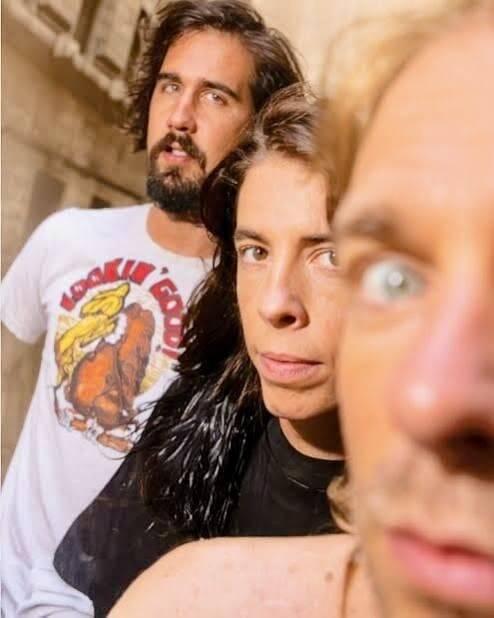
Nel novembre del 1989, i Nirvana arrivarono in Italia per il tour “Heavier Than Heaven”. Co-headliner insieme ai TAD, i membri della band erano musicisti punk in cerca di sopravvivenza, stipati con tutta la loro strumentazione in un gelido furgone Fiat. Senza soldi e privi di sonno nella nebbia invernale della Pianura Padana, affrontarono il tour più come una prova di resistenza fisica che come una vetrina musicale. La loro architettura sonora era definita da un rumore abrasivo. Dietro la batteria sedeva Chad Channing, il cui stile preciso e dalle sfumature jazz faceva da ancoraggio al lento sludge metallico dell’album di debutto della band, *Bleach*. Brani come “Scoff” e “Paper Cuts” puntavano su una distorsione pesante piuttosto che su ritornelli orecchiabili. La band suonava praticamente “contro” il pubblico, nascondendosi dietro muri di feedback e i lunghi capelli di Kurt Cobain, spesso penalizzata da impianti audio scadenti nei locali.
La reazione iniziale dei fan italiani
La reazione iniziale dei fan italiani rimase confinata nell’ambito underground. Al “Bloom” di Mezzago, un gruppo di fan appassionati attese per ore al gelo a causa di un ritardo alla frontiera. Tuttavia, i locali erano minuscoli e semivuoti; per la maggior parte della gente del posto, i Nirvana erano semplicemente un altro gruppo indie americano rumoroso e sconosciuto.
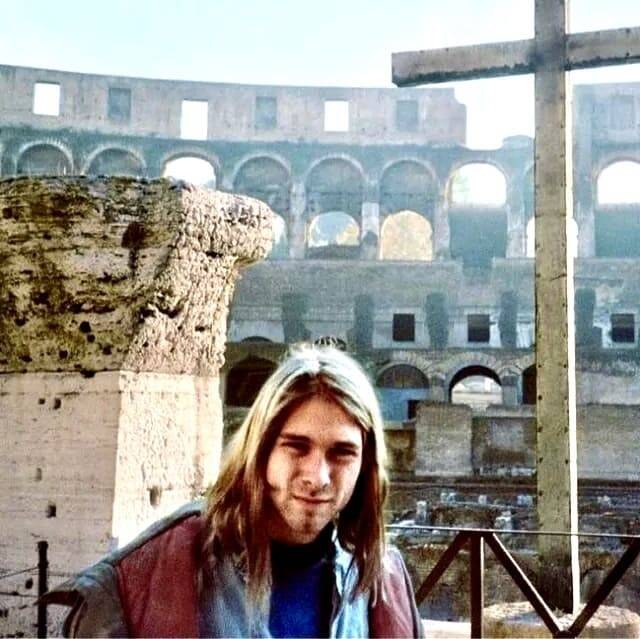
La tensione accumulata esplose il 27 novembre al “Piper Club” di Roma. Stremato dalla fatica fisica, dalla nostalgia di casa e alle prese con un amplificatore malfunzionante, Kurt ebbe un grave crollo nervoso sul palco: distrusse la chitarra, si arrampicò su un’enorme torre di casse e minacciò di buttarsi. L’episodio spaventò a tal punto i dirigenti della Sub Pop – l’etichetta discografica della band – che decisero di sospendere il tour per 24 ore, portando Kurt a visitare il Colosseo nel tentativo di tranquillizzarlo. Fu un tour segnato da una disperazione cruda.
Capitolo 2: 1991 – L’esplosione fragorosa della fama
Quando i Nirvana tornarono in Italia nel novembre del 1991, lo scenario era completamente cambiato. *Nevermind* era appena uscito, *Smells Like Teen Spirit* dominava le radio di tutto il mondo e la band era stata travolta da un vortice di improvvisa fama internazionale. Il gelido furgone Fiat era ormai un ricordo: grazie al supporto della Geffen Records, ora viaggiavano su un comodo tour bus, alloggiavano in hotel veri e propri e si affidavano a una troupe professionale.
La trasformazione più radicale avvenne dietro la batteria. Dave Grohl si era unito al gruppo, portando con sé una potenza fragorosa che rivoluzionò completamente l’energia dal vivo dei Nirvana. Grohl dettava il ritmo con un’autorità da stadio, percuotendo la batteria con una ferocia capace di far tremare la sala. Inoltre, le sue armonie vocali conferivano alle melodie di Kurt una marcata impronta pop, trasformando istantaneamente la band da gruppo da club dal suono grezzo e confuso in una potenza live travolgente e feroce. Anche il materiale musicale del gruppo si era evoluto, adottando la caratteristica dinamica “forte-piano-forte”.
Un flusso sonoro pesante e uniforme
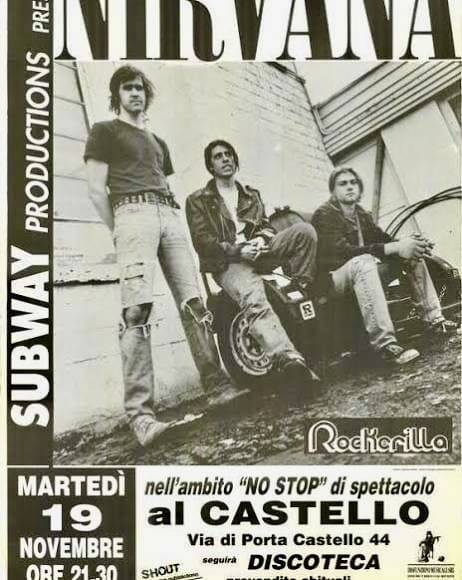
Invece di un flusso sonoro pesante e uniforme, facevano del contrasto la loro arma vincente. Brani come *Lithium* e *Drain You* alternavano strofe melodiche e delicate a ritornelli esplosivi e urlati. Con estrema sicurezza, anticipavano dal vivo inediti come *Rape Me* e si prendevano gioco del loro improvviso successo radiofonico eseguendo le hit a una velocità punk vertiginosa.
La reazione dei giovani italiani fu a dir poco isterica. I Nirvana si esibivano in spazi più ampi, come il Teatro Castello di Roma, ma le sale risultavano comunque pericolosamente inadeguate rispetto alla loro popolarità esplosiva. I fan andavano letteralmente in delirio: si arrampicavano sui muri, si appendevano alle travi del soffitto e si lanciavano in un *mosh pit* frenetico e caotico. Il pubblico cantava ogni singola parola alla perfezione, trattando la band come dei re, mentre Kurt appariva energico, giocoso e disinvolto.
Capitolo 3: Il contrasto tra due epoche
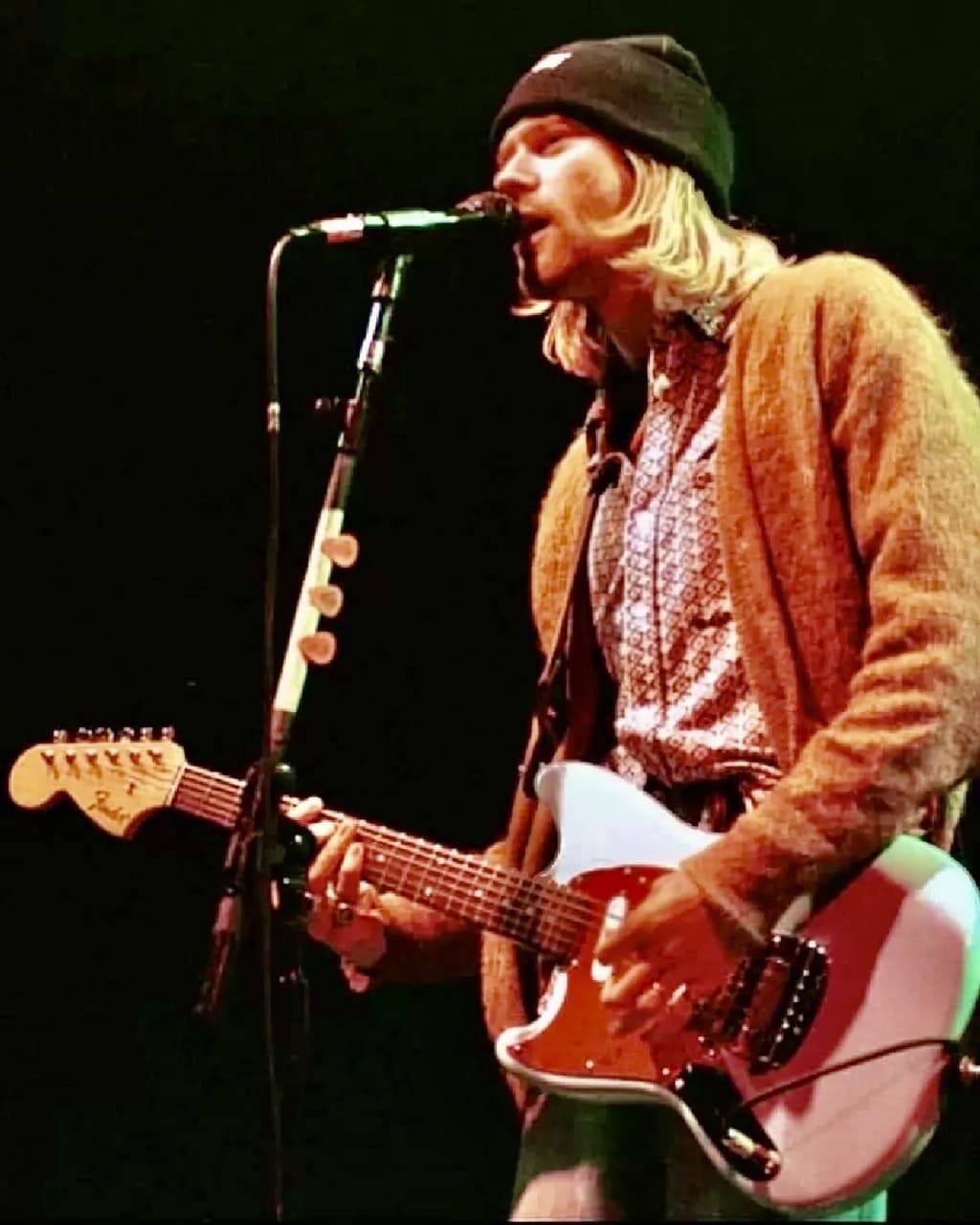
Il passaggio dal 1989 al 1991 segna l’autentica età dell’oro nell’ascesa dei Nirvana, dimostrando come un cambiamento nella filosofia personale e compositiva possa trasformare il destino di un gruppo. L’Italia ha rappresentato il banco di prova ideale per entrambe le facce della medaglia. Nel 1989, il Paese fu testimone della nascita travagliata e priva di mezzi del “Seattle sound” all’interno di un club romano fumoso e carico di tensione. Appena ventiquattro mesi più tardi, assistette alla conquista fragorosa degli stadi — trainata dall’energia di Dave Grohl — che consacrò il grunge come cultura giovanile dominante del decennio.
Capitolo 4: Riflessioni a margine
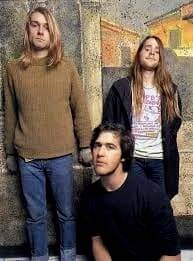
I diari europei di Kurt: Oltre l’energia caotica dei concerti e la logistica estenuante della vita “on the road”, Kurt Cobain annotava le proprie esperienze su quaderni a spirale. Questi diari privati offrono uno sguardo crudo e senza filtri sulla sua psiche durante i tour europei dei Nirvana. Rivelano un uomo profondamente combattuto riguardo alla propria arte e fisicamente sofferente, eppure acuto osservatore del mondo in trasformazione che lo circondava.
Durante il tour del 1989, gli scritti di Kurt erano fortemente condizionati dai suoi disturbi fisici e dalla frustrazione verso l’industria musicale. Scriveva spesso del suo dolore cronico allo stomaco, aggravato da una pessima alimentazione durante i viaggi e dallo stress di stare stipato nel furgone. I suoi appunti sono pieni di scalette scribacchiate, bozze di testi e sfoghi rabbiosi contro la commercializzazione del punk rock. Kurt esprimeva un profondo senso di alienazione, sentendosi come un’attrazione da circo esibita davanti a un pubblico straniero che non comprendeva appieno lo spirito ribelle e anticonformista della scena di Seattle.
Nel 1991, il tono del diario di Kurt mutò
Nel 1991, il tono del diario di Kurt mutò, passando dalla rabbia dell’outsider al profondo disorientamento causato dall’improvvisa celebrità. Usava i quaderni per elaborare la natura surreale del diventare milionario da un giorno all’altro, abbozzando idee satiriche per videoclip e scrivendo finte interviste per prendere in giro la stampa mainstream. A queste riflessioni ciniche si mescolavano, tuttavia, momenti di autentica passione artistica. I diari del 1991 contengono frammenti di testi per brani che avrebbero poi caratterizzato l’album “In Utero”, fungendo da testimonianza permanente del suo eterno conflitto interiore tra purezza creativa e logoramento commerciale.
Capitolo 5: 1994 – Il gran finale e l’ultimo atto
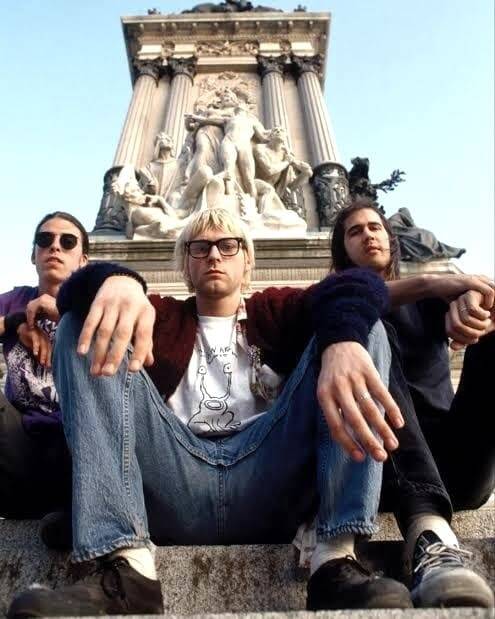
Nel febbraio del 1994, i Nirvana tornarono in Italia per il loro terzo e ultimo tour, a supporto dell’album “In Utero”; i club intimi del passato lasciarono completamente il posto a enormi palazzetti dello sport. L’ultima serie di concerti italiani fu caratterizzata da una dualità agrodolce: una band che mostrava la propria piena maturità musicale davanti a un pubblico tra i più appassionati di sempre, proprio mentre calava il sipario sulla loro carriera dal vivo. Il nucleo del trio si ampliò diventando un quartetto con l’aggiunta del chitarrista ritmico Pat Smear, mentre la violoncellista Melora Creager arricchiva gli arrangiamenti con sonorità suggestive e struggenti. Le scalette bilanciavano perfettamente la cruda energia punk con le raffinate dinamiche acustiche perfezionate durante l’MTV Unplugged. La band tenne concerti da tutto esaurito in grandi arene – come il Palatrussardi di Milano – dove i fan italiani rispondevano alla potenza sonora del gruppo cantando ogni melodia in un unico, grande coro.
Nirvana: uno storico addio alla televisione
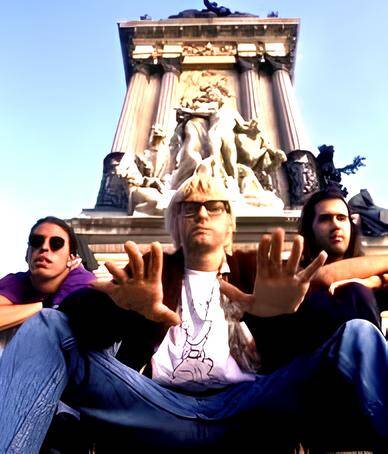
Il gruppo offrì anche uno storico addio alla televisione. Il 23 febbraio 1994, i Nirvana si esibirono negli studi RAI di Roma per il programma di varietà “Tunnel”. Senza che ne fossero consapevoli, quella sarebbe stata la loro ultima apparizione televisiva. Fedele alle radici anti-commerciali del gruppo, l’esibizione testimoniò la ferma volontà della band di non scendere a compromessi sulla propria integrità artistica.
Sebbene il tour sia stato infine interrotto a causa della crescente spossatezza di Kurt, la tournée del 1994 rimane un capitolo memorabile. Fu l’ultima occasione in cui il pubblico europeo poté ammirare la magia di Cobain, Grohl e Novoselic insieme sul palco. Per i fan italiani che gremirono quelle arene, fu una celebrazione splendida ed energica di una band all’apice della propria maestria artistica, capace di suggellare un legame leggendario tra i Nirvana e l’Italia, destinato a durare ancora oggi.
Conclusione: L’eredità nella polvere
La parabola dei Nirvana in Italia rispecchia la traiettoria della band stessa. Tutto ebbe inizio nel gelido fango del 1989, alimentato dalla cruda disperazione punk e dalle sonorità sludge e metalliche di “Bleach”. Il successo esplose nel 1991, trainato dalla potenza da stadio di Dave Grohl e dalle melodie trascinanti di “Nevermind”. Raggiunse il suo apice artistico nel 1994, offrendo un paesaggio sonoro maturo e dalle splendide stratificazioni, prima di svanire dolcemente. In tutto questo, il pubblico italiano si rivelò la platea ideale: appassionato, caotico e ferocemente fedele a una band che ha cambiato il mondo.
SMELLS LIKE A SPAGHETTI WESTERN: NIRVANA’S ITALIAN EVOLUTION
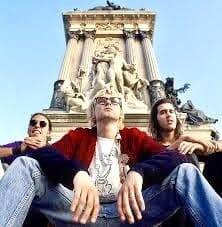
How a Three-Piece Punk Band from Seattle Conquered the Passion of Italy.
Introduction: The Italian Crucible: The story of Nirvana in Italy serves as a perfect microcosm for one of the most meteoric, volatile
Leggi anche: Nirvana: la band che portò il grunge nel mainstream musicale
transformations in rock history. In just two years the band evolved from a broke underground punk act into a stadium filling cultural phenomenon. By tracking the drastic shifts in their lineup, musical identity, and the behavior of the passionate Italian crowds, we witnessed the exact moment Nirvana conquered the world, and the heavy toll that victory extracted.
Chapter 1: 1989 – The Agony of the Underground Sludge
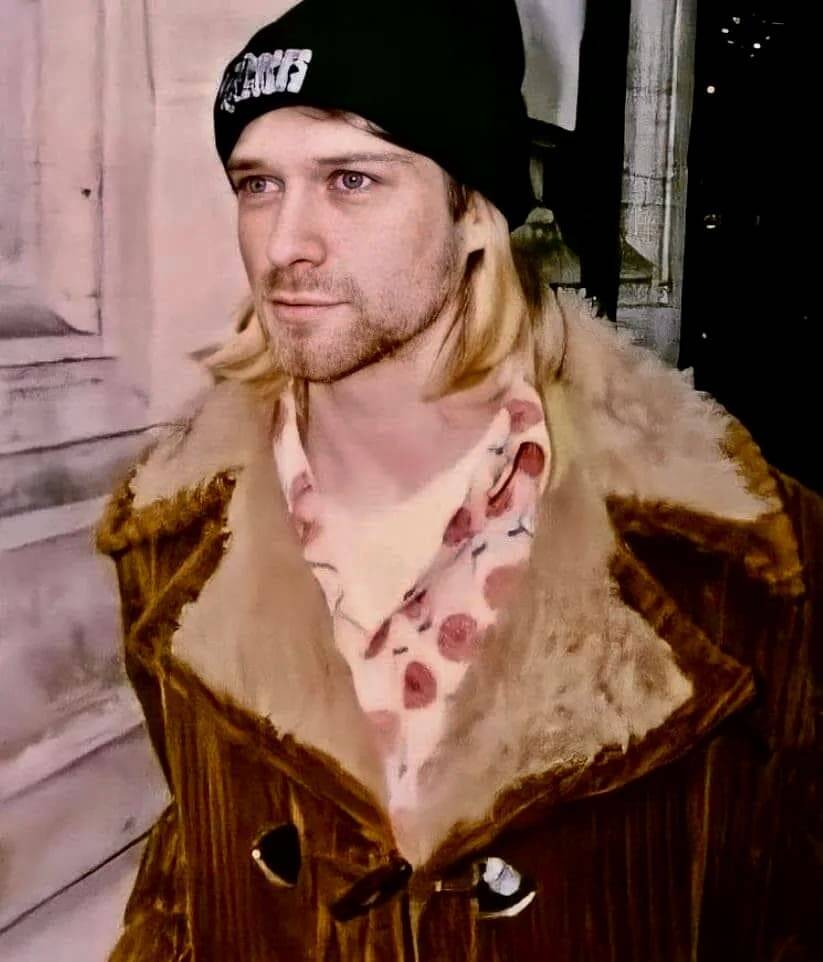
In November of 1989, Nirvana arrived on Italian soil for their “Heavier Than Heaven” tour. Co-headlining with TAD, the band members were transient punk musicians fighting for survival, crammed into a freezing Fiat van with all their gear. Broke and sleep deprived in the winter fog of the Po valley, they treated the tour more like an exercise in physical endurance then a musical showcase. Their sonic architecture was defined by abrasive noise. Behind the drums sat Chad Channing, whose precise jazz-tinged style anchored the slow, metallic sludge of Nirvana’s debut album, Bleach. Songs like “Scoff” and “Paper Cuts relied on heavy distortion rather than catchy hooks. The band essentially played at the audience, hiding behind veils of feedback and Kurt Cobain’s long hair, frequently derailed by low quality club audio equipment.
The initial Italian fan reaction
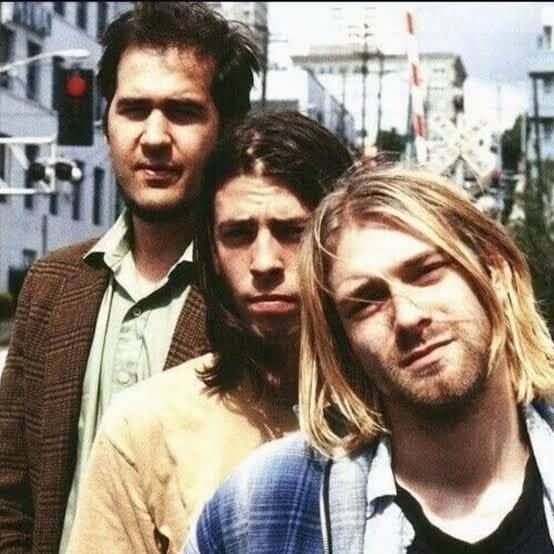
The initial Italian fan reaction was strictly underground. At a club “Bloom in Mezzago,” a dedicated crowd waited for hours in the freezing cold after a border delay. However, venues were tiny and half-full; to most locals. Nirvana was simply another noisy, obscure American indie act. The pressure cooker exploded on November 27 at the “Piper Club” in Rome. Plagued by physical exhaustion, homesickness, and a malfunctioning amplifier, Kurt suffered a severe onstage breakdown. He smashed his guitar, climbed a massive speaker stack, and threatened to jump. The incident so terrified Nirvana’s record company, Sub Pop executives that they paused the tour for 24 hours, taking Kurt sightseeing at the Colosseum just to calm his mind. It was a tour defined by raw despair.
Chaper 2: 1991 – The Thunderous Explosion of Fame
When Nirvana returned to Italy in November 1991. The landscape had completely shattered. “Never Mind” had just been released, “Smells Like Teen Spirit” was dominating global airwaves and the band was caught in a whirlwind of sudden international fame. The freezing Fiat van was gone; backed by Geffen records, they now traveled in a comfortable tour bus, stayed in proper hotels, and relied on a professional crew.
The most radical transformation occurred behind the drums. Dave Grohl had joined the band, bringing a thunderous power that completely revolutionized Nirvana’s live energy. Grohl drove the tempo forward with stadium-sized authority, punishing his kit with a ferocity that shook the venue. Furthermore, his background vocal harmonies gave Kurt’s melodies a massive pop sheen, instantly elevating the band from a muddy club act into a ferocious live powerhouse.
Nirvana’s signature “loud-quiet-loud” dynamic
The band’s musical material had also evolved into their signature “loud-quiet-loud” dynamic. Instead of continuous sludge, they weaponized contrast. Tracks like “Lithium” and “Drain You” paired tender melodic verses with explosive, screaming choruses. Operating with supreme confidence, they teased unreleased tracks like “Rape Me” and mocked their own sudden radio success by blasting through hits at breakneck punk speed.
The reaction from Italian youth was nothing short of hysterical. Nirvana played larger venues like the “Teatro Castello in Rome, but the rooms were still dangerously undersized for their explosive popularity. Fans went absolutely wild, literally climbing the walls, hanging from rafters, and moshing in a chaotic frenzy. The crowd sang everything lyric flawlessly, treating the band like royalty while Kurt appeared energetic, playful, and loose.
Chapter 3: The Contrast of Two Eras
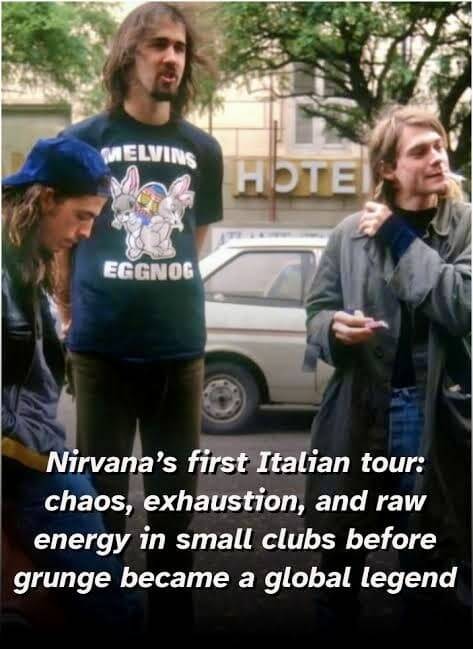
The jump from 1989 to 1991 represents the definitive golden era of Nirvana’s growth, showcasing how a change of personal and songwriting philosophy can alter a band’s destiny. Italy acted as the ultimate testing ground for both sides of the coin. In 1989 the country witnessed the agonizing, broke birth of the Seattle sound in a smoky, stressful Roman club. Just twenty four months later, they witnessed the thunderous, Dave Grohl-fueled stadium takeover that solidified grunge as the dominant youth culture of the decade.
Chapter 4: Reflections in the Margins

Kurt’s European Journals: Behind the chaotic energy of the concerts and the exhausting logistics of the road, Kurt Cobain documented his experiences in spiral notebooks. These private journals offer a raw, unvarnished window into his psyche during Nirvana’s European tours. The reveal a man deeply conflicted about his art, physically miserable, yet keenly observant of the changing world around him. During the 1989 tour Kurt’s writings were heavily consumed by his physical ailments and his frustration with the music industry. He frequently wrote about his chronic stomach pain, worsened by the terrible diet of the road and stress of the cramped van. His notes are full of scribbled set lists, rough lyric drafts, and angry diatribes against the commercialization of punk rock. Kurt expressed a deep sense of alienation, feeling like a circus act paraded in front of foreign audiences who didn’t fully understand the anti- establishment egos of Seattle.
By 1991 Kurt’s journal shifted from anger to disorientation
By 1991, Kurt’s journal shifted from the anger of an outsider to the profound disorientation of sudden fame. He used his notebooks to process the surreal nature of becoming a millionaire overnight, sketching satirical music video ideas, and writing mock interviews to mock the mainstream press. Mixed with these cynical reflections, however, were moments of genuine artistic passion. His journals from 1991contain early lyric fragments for songs that would define “In Utero” serving as a permanent record of his eternal tug of war between creative purity and commercial exhaustion.
Chapter 5: 1994 – The Grand Finale and the Final Curtain
In February 1994, Nirvana returned to Italy for their third and final tour, supporting “In Utero,” the intimate clubs of the past were completely replaced by massive sports arenas. The final Italian run was defined by a bitter sweet duality, a band showcasing their ultimate musical maturity to some of the most passionate they would ever play for, right before the curtain fell on their live career.
The core trio was expanded to a four-piece with rhythm guitarist Pat Smear, while cellist Melora Creager added haunting textures to the arrangements. The setlists beautifully balanced raw punk energy with the refined, acoustic dynamics they mastered during MTV Unplugged. They played massive, sold-out multi-night stands at venues like the “Palatrussardi in Milan” where the Italian fans matched the band’s sonic power by singing every melody back to them in a unified chorus. *
The band historic farewell to television
The band also delivered a historic farewell to television. On February 23, 1994, Nirvana performed at “RAI Studios” in Rome for the variety show “Tunnel.” It would unknowingly become the bands final televised appearance. True to their anti-commercial roots, the performance stood as a testament to the band’s refusal to compromise their artistic integrity.
While the tour was ultimately cut short due to Kurt’s escalating exhaustion, the 1994 tour remains a celebrated chapter. It was the final time Europeans witnessed the magic of Cobain, Grohl, and Novoselic together on stage. For the Italian fans who filled those arena’s, it was a beautiful, high energy celebration of a band at the peak of their craftsmanship, cementing a legendary bond between Nirvana and Italy that endures to this day.
Conclusion: The Legacy in the Dust
The narrative arc of Nirvana in Italy mirrors the trajectory of the band itself. It began in the
freezing mud of 1989, fueled by raw punk desperation and the metallic sludge of “Bleach.” It exploded into the mainstream in 1991, driven by the stadium sized power of Dave Grohl and the melodic hooks of “Nevermind”. It reached its artistic peak in 1994, offering a mature, beautifully layered sonic landscape before softly fading away. Through it all, the Italian crowd served as the ultimate audience, passionate, chaotic, and fiercely loyal to a band who changed the world.
Altro per te
 Musica
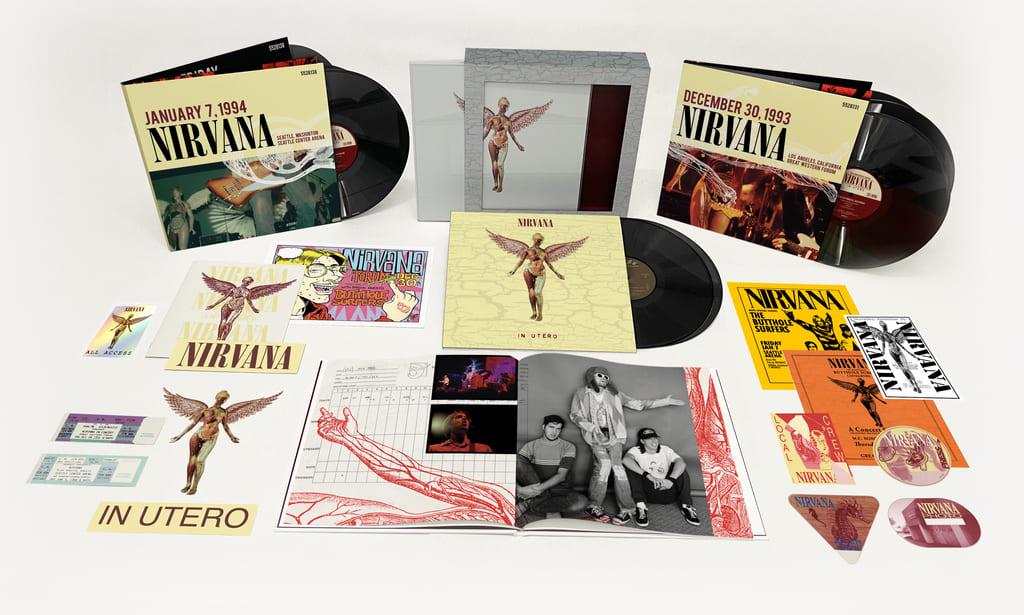
Nirvana: l’album “In Utero” compie trenta anni
L'album "In Utero" dei Nirvana compie trenta anni. Per questa occasione il 27 ottobre prossimo saranno quindi pubblicate diverse ristampe in diversi formati e…
 Luce bianca, Magia oscura: l’eco culturale dei Velvet Underground
 U2 tour 2027: il ritorno negli stadi è ufficiale, quando arrivano in Italia?
 U2, The Greatest Show On Earth: recensione e significato del nuovo singolo
 Rolling Stones, in arrivo la deluxe edition “Foreign Tongues, Loose Lips”
 Timoria, “El Topo Grand Hotel” festeggia 25 anni con una speciale edizione celebrativa
 Stereophonics celebrano 30 anni di musica con la raccolta “Tune! Ultimate Collection 96-26”
 MotelNoire tornano a Milano con “MALAMILANO”: annunciato il concerto evento del 13 dicembre
Su eBay: Nirvana - Bleach

Nirvana - Bleach (LP) Vinile - Picture Disc Limited Edition
Confronta il prezzo su - Sottogenere: Disco
- Artista: Nirvana
- Caratteristiche speciali: Picture disc
Vedi il prezzo su eBay


Lp NIRVANA "bleach" 2009 Sub Pop deluxe editions 2 lp vinile bianco come nuovo
Confronta il prezzo su - Dimensione: LP (12 pollici)
- Genere: Rock
- Velocità: 33 giri
Vedi il prezzo su eBay


Link affiliati: se acquisti, BACKdigit riceve una piccola commissione senza costi per te.