

Mille braccia per stringervi – Capitolo 1: La partenza
Salpammo a mezzogiorno di venerdì 24 maggio 1935. Lì fuori, ben al di sotto della superficie, mille braccia attendevano di stringerci a sé.
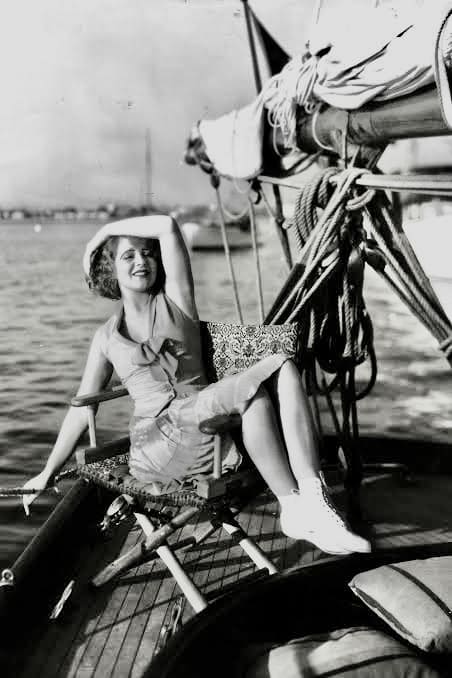
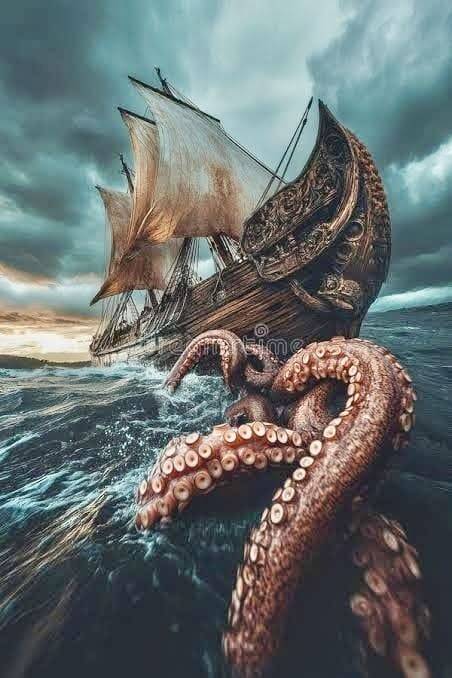
Navigavamo a bordo della *Sally Jane*, una vecchia goletta tradizionale in legno a due alberi, lunga 120 piedi. L’imbarcazione era stata noleggiata per le riprese di un film indipendente intitolato *The Pirate’s Quest*. La nostra destinazione erano delle coordinate a circa 30 miglia dalla costa di Atlantic City, nel New Jersey, esattamente sopra la tomba acquatica della *Esmeralda*, un veliero affondato in un’epoca ormai lontana.
A bordo c’erano 18 persone. L’equipaggio era guidato dal capitano Crabtree, dal primo ufficiale Rusty Stone, dal secondo ufficiale Hank Kimball e da cinque marinai esperti e temprati dal mare: Chase, Monty, Scotty, Tiny e Red. A occuparsi dei pasti c’era Cookie, mentre la gestione delle comunicazioni radio era affidata a Sparky.
A bordo una troupe cinematografica
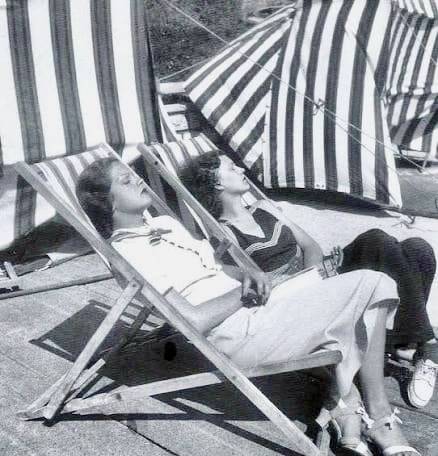
Il resto delle persone a bordo costituiva la troupe cinematografica. C’erano il regista, Phineas Featherstone, e il suo team di produzione: Biff Grant, Pete Jenkins, Andy Miller e Ralph Bickle. Seguivano gli attori: Floyd Gilbert, Jesse Stevens, Elsie Frost, Violet Francis, l’attore protagonista Chance Rogers e la nostra protagonista femminile, Jamie Summerly. Jamie si rifiutava di viaggiare senza la sua piccola Yorkshire terrier, Blossom, che trascorreva gran parte del tempo raggomitolata in una cesta di vimini sul ponte, all’ombra.
All’inizio, la navigazione procedeva senza intoppi. L’Atlantico era una tavola e lo scafo in legno fendeva l’acqua con facilità. Poi arrivò il primo segnale di pericolo. Un tonfo sordo e potente echeggiò da qualche parte, ben al di sotto della linea di galleggiamento. La *Sally Jane* ebbe un sussulto improvviso, facendo perdere l’equilibrio agli attori. Il capitano ipotizzò una collisione con tronchi alla deriva, detriti sommersi o forse una balena fuori rotta.
Capitolo 2: La Quiete
Più tardi, quella stessa sera, l’oceano divenne inquietantemente calmo. Una luna piena e brillante era sospesa nel cielo stellato, stendendo un velo d’argento sulle acque scure.
Improvvisamente, un tonfo pesante e umido fece vibrare la parte posteriore della nave. L’intera imbarcazione iniziò a tremare violentemente; i legni scricchiolavano sotto una pressione invisibile. Poi, con la stessa improvvisità con cui era iniziato, il tremolio cessò. Tutto tornò immobile e avvolto in un silenzio spettrale.
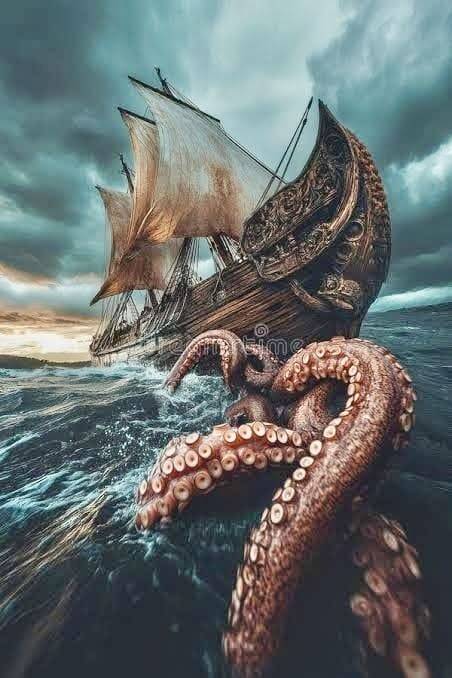
Al mattino, la reale gravità della situazione divenne evidente. Qualcosa non andava affatto. La radio era completamente fuori uso; i grossi cavi dell’antenna che risalivano lungo gli alberi erano stati tranciati di netto. Peggio ancora, la nave non rispondeva più al timone. La ruota del timone girava a vuoto tra le mani del timoniere, segno di gravi danni al timone stesso.
Alle prime luci dell’alba, il capitano Crabtree ordinò a due marinai di scendere nelle acque gelide per ispezionare il danno. Quando i sommozzatori riemersero, non usarono nemmeno la scaletta. Si arrampicarono lungo la fiancata dello scafo, con i volti pallidi per il terrore puro e il respiro affannoso, mentre si trascinavano sul ponte. Riferirono che la pala del timone era andata completamente in frantumi, ma prima che potessero spiegare cosa fosse quell’enorme sagoma gommosa e pulsante che avevano visto stringere la chiglia, il mare iniziò ad agitarsi violentemente.
Capitolo 3: Il attacco
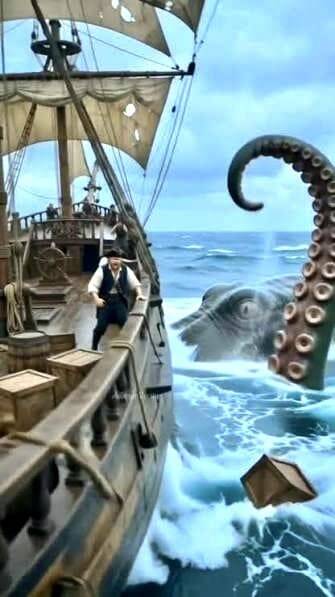
Cookie fu il primo a cadere vittima. Più tardi quella mattina, del tutto ignaro del panico che stava montando sul ponte di comando, si avvicinò alla ringhiera laterale per gettare in mare gli scarti della cucina.
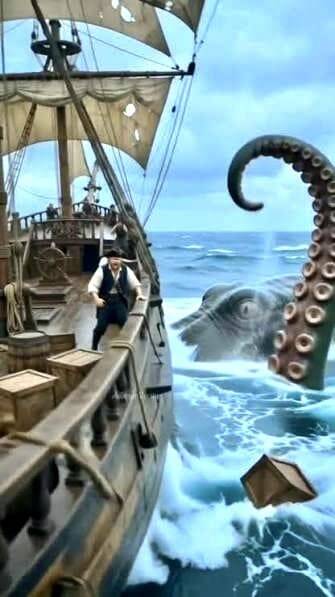
Non appena i rifiuti toccarono l’acqua, un fragoroso sciacquio esplose contro lo scafo. Prima ancora che Cookie potesse battere le palpebre, un tentacolo enorme e muscoloso — spesso quanto il tronco di un albero e costellato di ventose affilate come rasoi — scattò oltre la ringhiera di legno. Si avvolse strettamente attorno alla sua vita, bloccandogli le braccia.
“Aiuto! In acqua! Dio mio, aiutami!” gridò Cookie.
Il tentacolo lo sollevò in aria, lasciandolo penzolare sopra il mare in burrasca. Dalle profondità sottostanti, un occhio colossale e impassibile — vasto e gelido — lo fissava. Cookie era un uomo duro. Riuscì a liberare la mano destra ed estrasse il suo pesante coltello da cucina. Continuò a dimenarsi, scalciando e urlando, mentre sferrava fendenti furiosi e affondava la lama nella carne gommosa. Un inchiostro nero e oleoso trasudava dalle ferite, ma il mostro non mollava la presa. Con uno strattone improvviso e orrendo, l’arto scaraventò Cookie dritto al centro della massa brulicante, proprio verso il becco stritolante della creatura, simile a quello di un pappagallo.
L’orrore si muoveva con una velocità impossibile. Toccò poi a Sparky, l’operatore radio. Udendo le grida, si era barricato nella cabina delle comunicazioni, tentando disperatamente di giuntare i cavi dell’antenna spezzati per chiedere aiuto. Non ne ebbe mai l’occasione. Un tentacolo infranse il vetro della finestra, insinuandosi nella cabina come un serpente all’attacco. Si avvolse attorno al collo di Sparky, soffocandogli l’urlo in gola, e lo trascinò di peso attraverso lo stretto oblò, frantumandone il telaio mentre l’uomo spariva negli abissi.
La caccia
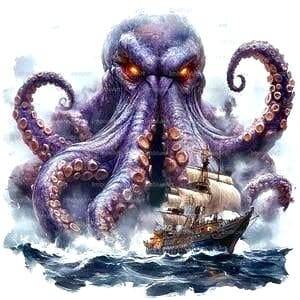
Il panico esplose a bordo della Sally Jane. Resosi conto che erano diventati prede, il capitano Crabtree radunò i superstiti. I marinai sfondarono l’armadietto delle armi, distribuendo arpioni, asce e ganci d’abbordaggio. Persino la troupe cinematografica e gli attori si unirono alla difesa, impugnando pesanti treppiedi metallici per cineprese e affilate spade di scena tratte da *The Pirates Quest*.
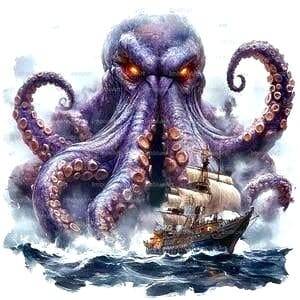
Ma le armi umane erano inutili contro un antico terrore degli abissi. Il mostro non si limitava ad attaccare: perlustrava sistematicamente ogni angolo dell’imbarcazione. Un migliaio di braccia emerse dall’Atlantico, avvolgendosi attorno ai due alberi, spezzando le sartie come fossero fili e oscurando il sole.
«Tenete la posizione!» ruggì Rusty Stone, calando un’ascia su un tentacolo che strisciava sul ponte principale. Ne recise la punta, ma altri tre tentacoli lo colpirono in pieno, frantumandogli le costole prima di scaraventarlo in mare.
La creatura dava loro la caccia con metodo…
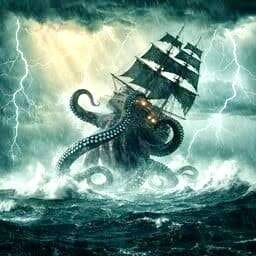
La creatura dava loro la caccia con metodo. Sottocoperta, Phineas Featherstone, Biff Grant e Ralph Bickle si barricarono nella cambusa. Fu tutto inutile. I tentacoli sfondarono simultaneamente il pavimento di legno e i boccaporti superiori. Gli uomini vennero trascinati via dai loro nascondigli uno a uno; le unghie lasciavano solchi disperati nel legno mentre venivano tirati su, verso la luce accecante del giorno, e poi giù, nelle profondità del mare.
Sul ponte, gli attori si stringevano l’uno all’altro in preda al terrore più assoluto. Chance Rogers tentò di difendere Jamie Summerly, brandendo una sciabola di scena contro un tentacolo che strisciava verso di loro. La spada finta si spezzò in due contro la pelle gommosa. L’arto si avvolse attorno a entrambi, stringendoli in una morsa soffocante. Le grida dei due protagonisti echeggiarono sull’acqua prima che anch’essi venissero trascinati oltre la murata, lasciando il ponte scivoloso di acqua di mare e schiuma.
Il capitano Crabtree, Tiny e Red opposero un’ultima resistenza al timone, colpendo furiosamente le appendici che si avvolgevano attorno alla ruota del timone. Ma l’enorme peso del mostro iniziò a far inclinare su un fianco la goletta di 120 piedi. Uno dopo l’altro, gli ultimi membri dell’equipaggio persero l’equilibrio, scivolando lungo il ponte ormai fortemente inclinato e finendo dritti tra i tentacoli in attesa. Nel giro di pochi minuti, le grida cessarono. La nave tornò in posizione verticale, oscillando dolcemente sull’acqua.
Capitolo 5: Troppo tardi…
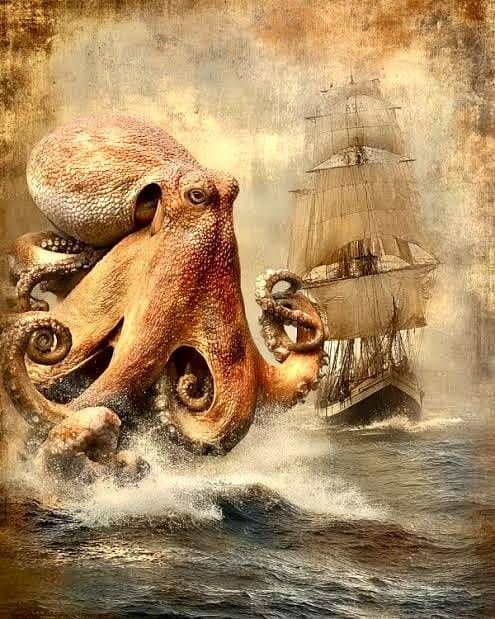
Tre giorni dopo, il cutter USS Montgomery stava pattugliando le rotte commerciali quando le vedette avvistarono un’imbarcazione che andava alla deriva, senza meta, sotto il sole accecante dell’Atlantico. Attraverso il binocolo, il capitano della nave notò le vele squarciate, il sartiame spezzato e la totale assenza di attività sul ponte.
Una squadra d’abbordaggio composta da sei marinai armati raggiunse a remi la goletta alla deriva. Quando scavalcarono la murata della Sally Jane, si ritrovarono a bordo di una nave fantasma.
Il silenzio era assordante
Il silenzio era assordante. I ponti erano interamente ricoperti di incrostazioni saline e di strane macchie scure. Oggetti personali giacevano sparsi ovunque: un treppiede per fotocamera rotto giaceva vicino all’albero maestro, un’ascia era conficcata profondamente nel legno del ponte e alcune spade di scena erano sparse qua e là come giocattoli abbandonati. I boccaporti erano sfondati verso l’interno e le cabine erano completamente devastate, come se un uragano si fosse abbattuto esclusivamente all’interno della nave.
“Ispezionate l’imbarcazione”, ordinò il tenente di vascello con voce tremante. “Cercate giornali di bordo, superstiti, qualsiasi cosa.”
Leggi anche: Le cronache dei vampiri di Emily Barrett: lo spettro nella quercia – Parte 1
I marinai perlustrarono la stiva, la cambusa e la cabina del capitano. Trovarono sangue, devastazione strutturale e segni di una lotta frenetica e violenta, ma nemmeno una traccia di resti umani. I diciotto uomini e donne partiti da Atlantic City erano svaniti nel nulla.
Mentre il tenente risaliva sul ponte principale, completamente sconcertato da quella scena inquietante, udì un suono debole e straziante.
Un guaito
I marinai imbracciarono i fucili, voltandosi verso la provenienza del suono. Lì, seduto all’ombra dell’albero maestro spezzato, c’era un piccolo cesto di vimini intrecciato. Era rimasto completamente intatto, risparmiato dal caos che aveva distrutto il resto della nave.
Il tenente si avvicinò lentamente e sollevò il coperchio. All’interno, rannicchiata e tremante in modo incontrollabile per il trauma e la fame, c’era Blossom, la piccola Yorkshire terrier. Il pelo era umido di salsedine e i suoi grandi occhi scuri fissavano i marinai. Era l’unica testimone dell’incubo emerso dal mare: l’unico essere vivente rimasto a raccontare la storia delle mille braccia che avevano trascinato la *Sally Jane* nell’abisso.
Epilogo: La testimone silenziosa
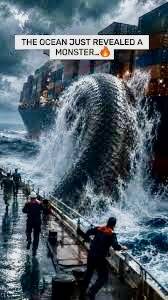
L’inchiesta marittima ufficiale di Atlantic City si concluse il 15 settembre 1935, tra un diffuso senso di frustrazione burocratica. La commissione navale attribuì infine la scomparsa della *Sally Jane* alle tragiche conseguenze dell’esplosione non registrata di una caldaia o all’impatto improvviso di un’onda anomala, nonostante lo scafo della goletta fosse rimasto in gran parte intatto e i motori fossero del tutto integri. Le strane macchie nere sul legno vennero liquidate come semplice olio motore.
La famiglia di Jamie Summerly prese Blossom in custodia. La piccola Yorkshire non abbaiò mai più. Trascorreva le giornate seduta accanto al camino in una tranquilla casa a schiera di Boston, fissando il vuoto delle pareti, con il corpo che tremava ogni volta che il vento ululava o che l’odore di salsedine giungeva dal porto. Custodiva da sola il segreto della Sally Jane.
Due anni dopo, nell’ottobre del 1937, la nebbia gravava così fitta sulle rotte atlantiche che la prua della SS Caledonian era completamente inghiottita da una foschia grigia. L’imponente mercantile dallo scafo in acciaio procedeva lentamente verso New York; la sua sirena da nebbia emetteva un richiamo solitario e ritmico ogni due minuti.
“L’acqua è piatta come uno specchio. Non c’è nemmeno un’onda lunga”…
Sul ponte di comando, il terzo ufficiale si sistemò il colletto per proteggersi dal freddo umido, fissando il vuoto di quel muro bianco e uniforme. “Notte tranquilla, signore”, mormorò al timoniere.
“Troppo tranquilla”, rispose il timoniere, senza distogliere lo sguardo dalla bussola. “L’acqua è piatta come uno specchio. Non c’è nemmeno un’onda lunga.”
Nelle profondità sottostanti lo scafo d’acciaio, invisibile e celata sotto le gelide onde nere, un’enorme e antica sagoma iniziò a risalire. Un occhio colossale, freddo e dallo sguardo fisso, si aprì nell’oscurità, puntandosi sull’elica vibrante del mercantile.
Sul ponte, il timone ebbe un improvviso e violento scossone verso sinistra, strappandosi dalla presa del timoniere.
Un tonfo…
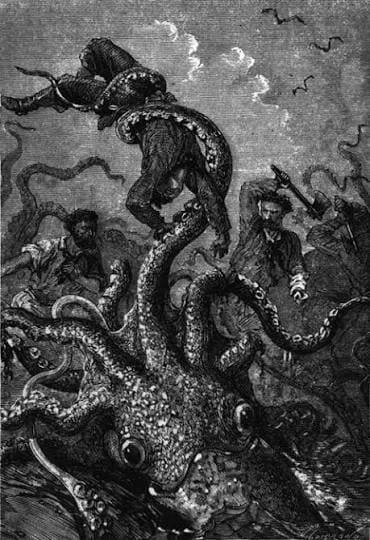
Una vibrazione pesante e umida si propagò attraverso le lamiere di ferro, provenendo dall’estrema poppa della nave. I motori gemettero e il mercantile, lungo oltre centoventi metri, scivolò di traverso, rallentando fino a un’andatura quasi impercettibile.
“Cosa abbiamo colpito? Un banco di sabbia?” gridò l’ufficiale, lanciandosi verso il telegrafo di macchina.
Prima che potesse azionare la leva, la nebbia oltre i vetri del ponte sembrò farsi più densa, tingendosi di una tonalità di nero profonda e innaturale. Dal vuoto nebbioso emerse silenziosamente, oltre la prua di dritta, un braccio enorme e gommoso, spesso quanto una conduttura di caldaia e costellato di file di denti circolari affilati come rasoi. L’arto si avvolse attorno all’albero di prua, spezzando i cavi d’acciaio con schiocchi simili a colpi di pistola.
Poi ne apparve un altro. E un altro ancora. Mille braccia che si protendevano attraverso la nebbia, pronte ad afferrarli.
A Thousand Arms to Hold You – Short Novel
Chapter 1: The Outward Bound
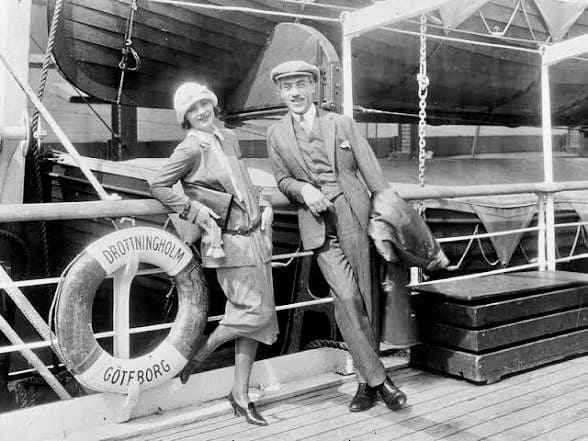
We slipped away from the dock at noon on Friday, the 24th of May 1935. While out to sea, well below the surface, a thousand arms awaited to hold us.
We were sailing on the Sally Jane, an old 120-foot long, two-mast, traditional wooden schooner. She had been chartered for a film shoot for an independent movie titled The Pirates Quest. Our destination was a coordinate roughly 30 miles off the coast of Atlantic City, New Jersey, directly over the watery grave of The Esmeralda, a sunken sailing ship from a bygone century.
There were 18 souls on board. The vessel was run by Captain Crabtree, 1st Mate Rusty Stone, 2nd Mate Hank Kimball, and five able, salt-hardened seamen named Chase, Monty, Scotty, Tiny, and Red. Feeding the crew was Cookie, and managing the airwaves was our radio operator, Sparky.
The rest of the manifest comprised the cinema crew
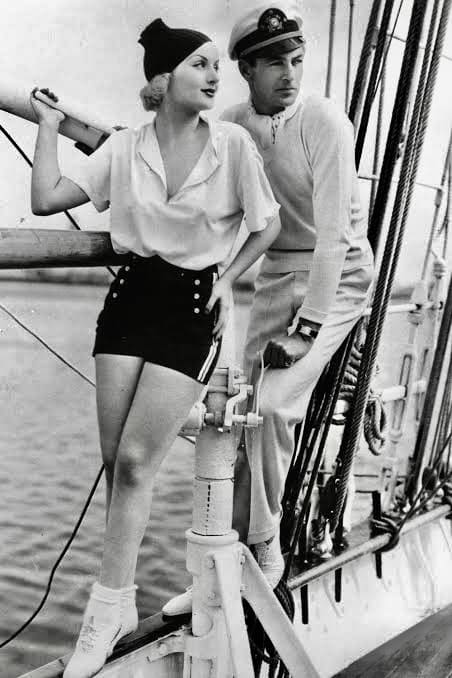
The rest of the manifest comprised the cinema crew. There was the director, Phineas Featherstone, and his production team: Biff Grant, Pete Jenkins, Andy Miller, and Ralph Bickle. Then came the actors: Floyd Gilbert, Jesse Stevens, Elsie Frost, Violet Francis, leading man Chance Rogers, and our leading lady, Jamie Summerly. Jamie refused to travel anywhere without her little Yorkie, Blossom, who spent most of her time curled in a wicker basket on the shaded deck.
Leggi anche: Mini-story horror: La roccia di Sally
At first, all was clear sailing. The Atlantic was flat, and the wooden hull cut through the water with ease. Then came the first sign of trouble. A loud, dull bang echoed from somewhere deep below the waterline. The Sally Jane momentarily shuddered, throwing the actors off balance. The captain assumed it was a collision with floating timber, underwater debris, or perhaps a wayward whale.
Chapter 2: The Stillness
Later that evening, the ocean became unsettlingly calm. A brilliant full moon hung suspended in the starry sky, casting a silver sheet over the dark water.
Suddenly, a heavy, wet thud vibrated from underneath the rear of the ship. The entire vessel began to shake violently, its timbers groaning against an unseen pressure. Then, just as abruptly as it started, the shaking stopped. All was still, and eerily quiet.
By morning, the true gravity of our situation became clear. All was not well. The radio was entirely disabled; the massive antenna wires running up the masts had been snapped clean. Worse, the ship refused to steer. The wheel spun loosely in the helmsman’s hands, indicating severe damage to the rudder.
At first light, Captain Crabtree ordered two seamen down into the freezing water to investigate. When the divers surfaced, they didn’t even use the ladder. They scrambled up the side of the hull, their faces pale with pure terror, hyperventilating as they dragged themselves onto the deck. They reported that the rudder blade had been completely shattered, but before they could explain the massive, rubbery, pulsing shape they saw gripping the keel, the sea began to churn.
Chapter 3: The First Strike
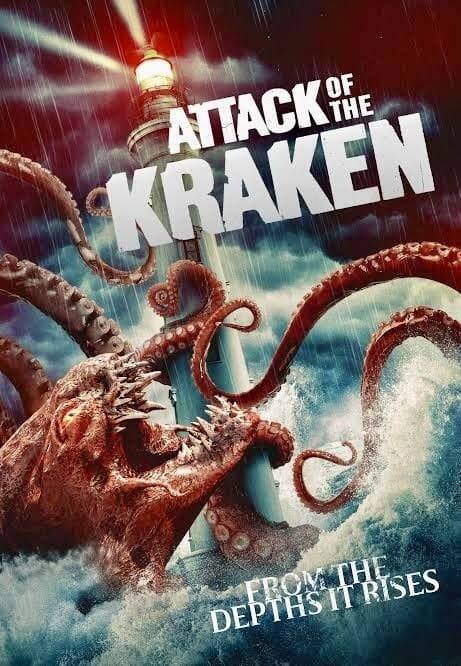
Cookie was the first to go. Later that morning, completely unaware of the panic building on the quarterdeck, he walked to the side rail to throw kitchen garbage overboard.
As the scraps hit the water, a wet, rushing sound exploded from the hull. Before Cookie could blink, a massive, muscular tentacle, thick as a tree trunk and lined with razor-sharp suckers, whipped over the wooden railing. It wrapped tightly around his waist, pinning his arms.
“Help! In the water! God help me!” Cookie hollered.
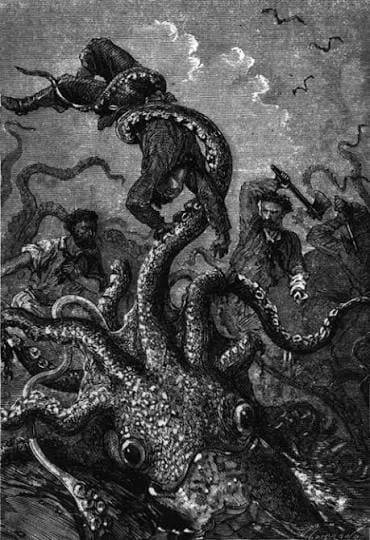
The tentacle hoisted him high into the air, dangling him above the foaming sea. From the depths below, a colossal, unblinking eye—vast and cold—stared up at him. Cookie was a tough man. He managed to free his right hand and drew his heavy kitchen knife. He went down kicking and screaming, slashing away furiously, burying the blade deep into the rubbery flesh. Black, oily ink oozed from the wounds, but the monster didn’t let go. With a sudden, horrific jerk, the arm dropped Cookie straight into the center of the writhing mass, right into the creature’s crushing, parrot-like beak.
The horror moved with impossible speed. Sparky, the radio operator, was next. Hearing the screams, he had locked himself inside the communications shack, desperately trying to splice the snapped antenna wires to call for help. He never got the chance. A tentacle smashed through the glass window, threading itself into the cabin like a striking serpent. It coiled around Sparky’s neck, choking out his scream, and dragged him bodily through the narrow porthole, shattering the frame as he vanished into the deep.
Chapter 4: The Hunt
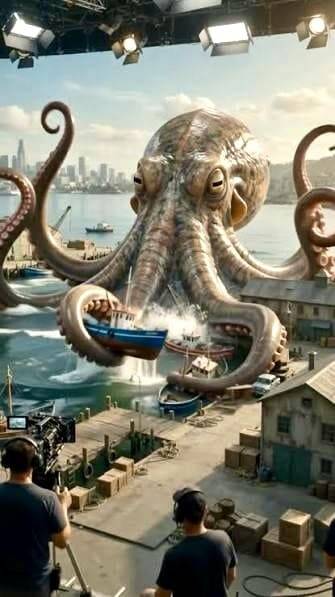
Panic erupted on the Sally Jane. Realizing they were being hunted, Captain Crabtree rallied the survivors. The seamen smashed open the arms locker, distributing harpoons, axes, and gaff hooks. Even the film crew and actors joined the defense, grabbing heavy metal camera tripods and sharp prop swords from The Pirates Quest.
But human weapons were useless against an ancient terror of the deep. The monster did not simply attack; it systematically searched every nook and cranny of the boat. A thousand arms rose from the Atlantic, wrapping around the two masts, snapping the rigging lines like thread, and blocking out the sun.
“Hold the line!” Rusty Stone roared, swinging an axe at an arm creeping across the main deck. He severed the tip, but three more tentacles slammed into him, crushing his ribs before throwing him out into the ocean.
The creature hunted them down methodically
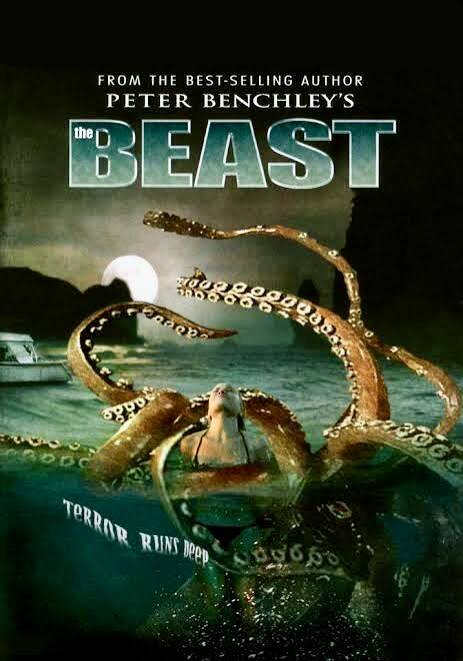
The creature hunted them down methodically. Below decks, Phineas Featherstone, Biff Grant, and Ralph Bickle barricaded themselves in the galley. It didn’t matter. The tentacles burst through the wooden floorboards and the overhead hatches simultaneously. The men were dragged out of their hiding places one by one, their fingernails leaving desperate gouges in the wood as they were pulled up into the blinding daylight and down into the sea.
On deck, the actors huddled together in absolute terror. Chance Rogers tried to defend Jamie Summerly, swinging a prop cutlass at a tentacle creeping toward them. The fake sword snapped in half against the rubbery skin and the arm wrapped around both of them, binding them in a tight, suffocating embrace. The screams of the leading man and leading lady echoed across the water before they, too, were pulled over the side, leaving the deck slick with seawater and foam.
Captain Crabtree, Tiny, and Red made a final stand at the helm, hacking wildly at the arms wrapping around the steering wheel. But the sheer weight of the monster began to tilt the 120-foot schooner on its side. One by one, the last of the crew lost their footing, sliding down the steeply angled deck directly into the waiting canopy of tentacles. Within minutes, the screaming stopped. The ship righted itself, rocking gently on the water.
Chapter 5: Too Late
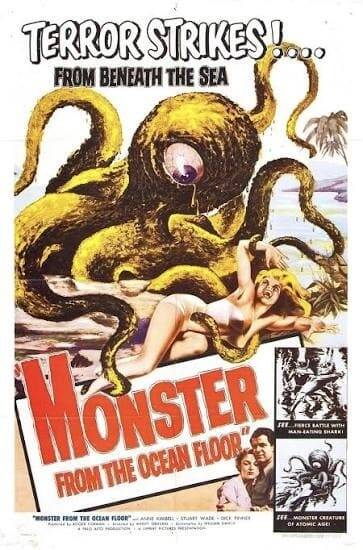
Three days later, the cutter USS Montgomery was patrolling the shipping lanes when the lookouts spotted a vessel drifting aimlessly under the blinding Atlantic sun. Through his binoculars, the naval captain noted the torn sails, the snapped rigging, and the complete lack of activity on deck.
Leggi anche: Arrivo a mezzanotte sul Delaware: Cronache dei Vampiri di Torresdale Vol. 4 (Parte 2)
A boarding party of six armed sailors rowed out to the drifting schooner. When they climbed over the rail of the Sally Jane, they found themselves stepping into a ghost ship.
The silence was deafening
The silence was deafening and the decks were completely washed in dried brine and strange, dark stains. Possessions were scattered everywhere: a broken camera tripod lay near the mast, an axe was buried deep in the deck wood, and prop swords were scattered like discarded toys. The hatches were busted inward, and the interior cabins were completely wrecked, as if a hurricane had localized entirely inside the ship.
“Search the vessel,” the naval lieutenant ordered, his voice trembling. “Look for logbooks, survivors, anything.”
The sailors searched the hold, the galley, and the captain’s quarters. They found blood, structural devastation, and signs of a frantic, violent struggle—but not a single trace of human remains. The 18 men and women who had sailed out of Atlantic City had vanished into thin air.
As the lieutenant stepped back onto the main deck, completely baffled by the eerie crime scene, he heard a faint, pathetic sound.
Whimper...
The sailors raised their rifles, turning toward the sound. There, sitting underneath the shadow of the shattered mainmast, was a small, woven wicker basket. It was completely untouched by the chaos that had leveled the rest of the ship.
The lieutenant approached slowly and lifted the lid. Sitting quietly inside, shivering uncontrollably from trauma and starvation, was Blossom, the little Yorkie. Her fur was damp with sea spray, and her large, dark eyes stared up at the sailors. She was the lone witness to the nightmare that had risen from the sea—the only living thing left to tell the tale of the thousand arms that had dragged the Sally Jane into the abyss.
Epilogue: The Silent Witness
The official maritime inquiry in Atlantic City concluded on September 15, 1935, under a heavy cloud of bureaucratic frustration.
The naval board ultimately ruled the disappearance of the Sally Jane a tragic consequence of an unrecorded boiler explosion or a sudden rogue wave, despite the fact that the schooner’s hull remained largely intact and her engines were completely untouched. That strange, black stains on the wood were dismissed as common engine oil.
Jamie Summerly’s family took custody of Blossom. The little Yorkie never barked again. She spent her days sitting by the fireplace in a quiet Boston brownstone, staring blankly at the walls, her body shivering whenever the wind howled or the scent of salt water drifted in from the harbor. She carried the secret of the Sally Jane alone.
Two years later, in October of 1937, the fog hung so thick over the Atlantic shipping lanes that the bow of the SS Caledonian was entirely swallowed by gray mist. The massive steel-hulled freighter was steaming slowly toward New York, her foghorn blowing a lonely, rhythmic blast every two minutes.
Up on the bridge, the third mate adjusted his collar against the damp chill, staring out into the featureless white wall. “Quiet night, sir,” he muttered to the helmsman.
“The water’s like glass. Not even a swell”…
“Too quiet,” the helmsman replied, keeping his eyes on the compass. “The water’s like glass. Not even a swell.”
Deep below the steel hull, out of sight and beneath the freezing black waves, a massive, ancient shape began to rise. A colossal, cold, unblinking eye opened in the dark, fixing its gaze on the vibrating propeller of the freighter.
On the bridge, the steering wheel suddenly jerked violently to the left, ripping itself out of the helmsman’s grip.
Thud…
A heavy, wet vibration echoed through the iron plates from the very rear of the ship. The engines groaned, and the 400-foot freighter slued sideways, slowing to a dead crawl in the water.
“What did we hit? A sandbar?” the mate shouted, lunging for the engine telegraph.
Before he could pull the lever, the fog outside the bridge windows seemed to thicken, turning a deep, unnatural shade of black. Out of the misty void, a massive, rubbery arm—thick as a boiler pipe and lined with rows of razor-sharp, circular teeth—rose silently over the starboard bow. It wrapped itself around the forward mast, the steel cable lines snapping with the sound of pistol shots.
Then came another arm. And another.
A thousand arms, reaching out through the fog, ready to hold them.
Altro per te
 Libri
LibriLa saga della famiglia Casey: dall’Irlanda a Philadelphia, fino al Nord Dakota e ritorno – Parte 1
La saga della famiglia Casey: dall'Irlanda a Philadelphia, fino al North Dakota e ritorno Capitolo 1: Il cuore di Ballymahon La nebbia del mattino…
 Le cronache dei vampiri di Emily Barrett: lo spettro nella quercia – Parte 2
 Arrivo a mezzanotte sul Delaware: cronache dei vampiri di Torresdale Vol. 4 (Parte 1)
 LE SORELLE DABNEY: ELVIRA, MYRTLE E IL PRIGIONIERO NEL BARATTOLO DI CETRIOLI
 Artemisia e i ciottoli: Le Cronache del Broken Arrow Ranch Vol. 2 – Parte 2
 Artemisia e i ciottoli: Le cronache del Broken Arrow Ranch Vol. 2 – Parte 1
 Intervista a Cristina Giuriolo: “Fragile”, il coraggio di raccontarsi attraverso le cicatrici
 Intervista ad Alessandra Caputo: On My Skin, la scrittura e il tempo per la creatività